Toxicity from the Heart

Mark 7:18-20

And he said to them, “Then are you also without understanding? Do you not see that whatever goes into a person from outside cannot defile him, since it enters not his heart but his stomach, and is expelled?” (Thus he declared all foods clean.) And he said, “What comes out of a person is what defiles him.

Jesus’s statement didn’t make much sense for me, at first, when I thought about it practically. What do you mean what goes into us does not defile us? Forget clean and unclean food or even the fact that Jesus isn’t talking about meat here but eating bread without ritually washing of the hands according to the Oral law. If I eat only snickers bars and drink copious amounts of coffee, this will eventually bring on disease within my body. Wait, wait Nate, you’re missing the point! This isn’t about food? It’s about not being legalistic and putting the law above love! I agree! I’m not the one making this passage all about Jesus making unclean meats now clean. Seriously, what a slap in the face to all the Jewish people who’d rather die (and many did) than eat unclean meat during the Seleucid occupation only 200 years prior. The history of the Maccabee’s righteous revolt set the stage for there to even be an Israel for Jesus to minister to. The disciples and Pharisees would NEVER let a statement like “all foods are clean now bro” just slide (if that’s what Jesus even truly meant)…I digress.

I started observing the food laws in the bible not because I thought of eating them as sin but realizing some of the wisdom laid down. All these unclean animals are not fit for consumption when you look into it. Granted, especially in America, we deal with bigger problems such as pesticides, GMO, preservatives, nutrient depleted soil (from not following God’s agricultural laws). But it goes back to my original question… is Jesus ignorant of the toxic effects of a poor diet? Well no, I believe we can safely assume Jesus would put our leading dietitians to shame. I’m making these assumptions so far: A. God’s law is His wisdom and if he says don’t eat something it has a practical reason B. Jesus understood God’s law and all the secrets of health that we have not even scratched the surface on today.

“It’s what comes out of a person that defiles him.”

Let’s clear up a common misconception people have regarding unclean animals. Having your household dog or cat does not make your home unclean. God did not make bad animals, he made animals for different purposes. Some animals He created to be used for food. Your cat is unclean to eat not unclean if you pet and cuddle it. In regards to unclean animals, the animal is technically not unclean because it is God’s perfect creation but just as the fruit from the tree of the knowledge of good and evil, it has a side effect. Toxicity.

“Goes out into the latrine”

Mr. kitty’s digested meat (I know we don’t want to think about eating cats but let’s continue with the example) goes into the toilet and is flushed away. I’ve owned cats before and they’d eat any animal they can find:  birds, mice even a few frogs 濫 I remember one of them coughing up tapeworms several times. I’m not going to dive into why clean animal  meat is far superior than scavengers, predators and bottom feeders because it’s not just WHAT they’re eating but how their digestive systems work.

Once I took a second to think about all this, Jesus statement makes a lot more sense. And on a side note Jesus literally tells us he likes to confuse those who think they’re so wise. He just wants you to mull things over and search and pray for understanding. I love when the bible perplexes me because I know God is smarter than me and If I continue to dive in and study I can find amazing wisdom. Unfortunately, most people will think this wisdom is folly and the Bible warns us of this. Sometimes it’s best to carefully pass out your pearls than toss them before those who will simply swallow them whole without chewing the cud to fully digest them.

What does it mean to be unclean as a human? Why does the Father care so much about this? Among other Temple purity issues, He wants to protect you and those around you.

Let’s face it. The world is dark and full of disease and that is scary. Health is a responsibility not just for yourself but those around you. I know I need to be healthy so I’m not shedding toxicity but antibodies to my herd. Seeing symptoms as sickness is backwards thinking. A healthy immune system reacts to toxic build up in the body by burning it with fever or excreting it out of the body. If the immune system is suppressed however, toxicity and inflammation can gather without your awareness, causing insidious diseases and cancers.

Yahweh wanted to protect His people from the diseases of the nations. Today we are surrounded by people who don’t take care of themselves even if they eat “Kosher”. Studies on obesity show they spread viral toxicity 60% more than the average person.

I’m afraid we’ve over spiritualized the Bible that we miss a lot of the practical things. I’d like to suggest to you it is this toxicity that comes out of your body that defiles you/makes you unclean. Yes, you can eat the perfect diet and still be a bitter, vile, narcissist but I think that is the overall point Jesus was trying to make here in Mark 7.

Mark 7:20 And he said, “What comes out of a person is what defiles him. For from within, out of the heart of man, come evil thoughts, sexual immorality, theft, murder, adultery, coveting, wickedness, deceit, sensuality, envy, slander, pride, foolishness. All these evil things come from within, and they defile a person.”


Eating unhealthy can definitely be put under a few of these heart issues Jesus mentions e.g. Wickedness (breaking God’s dietary laws) Sensuality (the enjoyment, expression, or pursuit of physical pleasures such as gluttony even if it is clean food) and foolishness. It all comes back to the heart in the end. The physical toxicity of diseases may come from your gut but we could make the argument the issue started in the heart. Some level of physical disease cannot even be blamed on that individual’s choices but on those around them and that is why following God’s law to the letter is so crucial. Failing to be righteous not only effects you but those around you. It’s the sin of society as a whole that has brought us to where we are today, down on our knees begging for Messiah’s return, His perfect city and His perfect laws that will be written on our hearts.

Matthew 5:19.

“So then, whoever breaks one of the least of these commandments and teaches others to do likewise will be called least in the kingdom of heaven; but whoever practices and teaches them will be called great in the kingdom of heaven.”

If someone breaks the commandments and teaches others to break them (even if through misunderstanding), if he has faith, he will STILL enter into the kingdom. He’ll just be lesser. Because those who are great in the kingdom are the wise who understand the law, PRACTICE IT, and teach it to others.

Will Death Passover you?

Below will be some passages that suggest the Levitical Priesthood will return, sacrificial system will be reestablished and the heavenly Temple as part of the New Jerusalem will come down to earth.
If there are feasts in the New Jerusalem 🟨 there will be sacrifice to God. This earth is a glimpse of what eternity with God will look like. Each feast of the Lord is a keyhole glimpse of what it will be like to share a meal with the Father.

Isaiah 25:6
On this mountain ADONAI-Tzva’ot
will make for all peoples
a feast of rich food and superb wines,
delicious, rich food and superb, elegant wines.
7 On this mountain he will destroy
the veil which covers the face of all peoples,
the veil enshrouding all the nations.
8 He will swallow up death forever.
Adonai ELOHIM will wipe away
the tears from every face,
and he will remove from all the earth
the disgrace his people suffer.
For ADONAI has spoken.

Jeremiah 31
10 Nations, hear the word of ADONAI! Proclaim it in the coastlands far away. Say: “He who scattered Isra’el is gathering him, guarding him like a shepherd his flock.”
11 For ADONAI has ransomed Ya’akov, redeemed him from hands too strong for him.
12 They will come and sing on the heights of Tziyon, streaming to the goodness of Adonai, to the grain, the wine, the olive oil, and the young of the flock and the herd. They themselves will be like a well-watered garden, never to languish again.
13 “Then the virgin will dance for joy, young men and old men together; for I will turn their mourning into joy, comfort and gladden them after their sorrow.
14 I will give the cohanim their fill of rich food, and my people will be satisfied with my bounty,” says ADONAI.

Jeremiah 33
14 “Here, the days are coming,” says ADONAI, “when I will fulfill this good promise which I have proclaimed for the house of Isra’el and the house of Y’hudah.
15 When those days come, at that time,
I will cause to spring up for David
a Branch of Righteousness.
He will do what is just and right in the land.
16 When those days come, Y’hudah will be saved,
Yerushalayim will live in safety,
and the name given to her will be
Adonai Tzidkenu [ADONAI our Righteousness].”

Zechariah 14
Then everyone who survives of all the nations that have come against Jerusalem shall go up year after year to worship the King, the LORD of hosts, and to keep the Feast of Booths. And if any of the families of the earth do not go up to Jerusalem to worship the King, the LORD of hosts, there will be no rain on them. And if the family of Egypt does not go up and present themselves, then on them there shall be no rain; there shall be the plague with which the LORD afflicts the nations that do not go up to keep the Feast of Booths. This shall be the punishment to Egypt and the punishment to all the nations that do not go up to keep the Feast of Booths.
And on that day there shall be inscribed on the bells of the horses, “Holy to the LORD.” And the pots in the house of the LORD shall be as the bowls before the altar. And every pot in Jerusalem and Judah shall be holy to the LORD of hosts, so that all who sacrifice may come and take of them and boil the meat of the sacrifice in them. And there shall no longer be a trader in the house of the LORD of hosts on that day.

Malachi 3
“Look! I am sending my messenger
to clear the way before me;
and the Lord, whom you seek,
will suddenly come to his temple.
Yes, the messenger of the covenant,
in whom you take such delight —
look! Here he comes,”
says ADONAI-Tzva’ot.
2 But who can endure the day when he comes?
Who can stand when he appears?
For he will be like a refiner’s fire,
like the soapmaker’s lye.
3 He will sit, testing and purifying the silver;
he will purify the sons of Levi,
refining them like gold and silver,
so that they can bring offerings to ADONAI uprightly.
4 Then the offering of Y’hudah and Yerushalayim
will be pleasing to ADONAI,
as it was in the days of old,
as in years gone by.

If we are seeing sacrifices in the Millennial reign, it may lead us to wonder: what did Jesus’s sacrifice purchase? Was it Jesus’s physical blood that purchased our redemption or was it His obedience? What is the good news? What is the gospel of the kingdom of God? The verses below are some of the many used to show substitutionary atonement as a foundation for the gospel: Christ died for my sins and now I’m saved because I believe… but how does this work? Is this what the narrative of the bible truly points to?

Passages used in support of substitutionary atonement:

Leviticus 17:11
For the life of the flesh is in the blood, and I have given it for you on the altar to make atonement for your souls, for it is the blood that makes atonement by the life.

Isaiah 53:4-5
Surely he has borne our griefs
and carried our sorrows;
yet we esteemed him stricken,
smitten by God, and afflicted.
But he was pierced for our transgressions;
he was crushed for our iniquities;
upon him was the chastisement that brought us peace,
and with his wounds we are healed.
All we like sheep have gone astray;
we have turned—every one—to his own way;
and the LORD has laid on him
the iniquity of us all.

1 peter 2:24-3:2
He himself bore our sins in his body on the tree, that we might die to sin and live to righteousness. By his wounds you have been healed. For you were straying like sheep, but have now returned to the Shepherd and Overseer of your souls.
Wives and Husbands
Likewise, wives, be subject to your own husbands, so that even if some do not obey the word, they may be won without a word by the conduct of their wives, when they see your respectful and pure conduct

1 peter 1:18-19
knowing that you were ransomed from the futile ways inherited from your forefathers, not with perishable things such as silver or gold, but with the precious blood of Christ, like that of a lamb without blemish or spot.

1 John 2:2 He is the propitiation for our sins, and not for ours only but also for the sins of the whole world. And by this we know that we have come to know him, if we keep his commandments.

Luke 4:43 But he said to them, “I must announce the Good News of the Kingdom of God to the other towns too — this is why I was sent.”

Ever notice there was no sacrifice for a sin committed intentionally? If you’re like me I get a bit of lump in my throat thinking about times I knew what was right and yet broke YHWH’s law anyway. What if we, like King David, did things we knew were wrong? Is there no propitiation for intentional sin? Now I don’t think King David really needed a Torah scroll to know killing a man after impregnating his wife was acting against God. One thing the Christian church has imbued me with since I was young and wwjd bracelets were upon every wrist, we need to walk as Jesus walked. If we follow the things Jesus taught in the New Testament we come away not only with a list that aligns well with the Torah but a better understanding of the heart of it.
At the feast of unleavened bread, the memorial of Christ’s death is mirrored by the early torah portions for Leviticus. We often use the phrase “Jesus is our Passover lamb” or “Jesus was the final sacrifice”. How literal do we take this though in contrast to the sacrifices mentioned in the Torah? He wasn’t really a lamb nor did He fulfill all the requirements such as being one year old, or being burnt on an altar. Jesus was our sacrifice but not all sacrifices were for the covering of sin, some were a fellowship meal with the Father and again, none was for intentional sin… or were they?
If we compare King David’s sin with Achan’s, who took condemned treasures from Jericho and was stoned to death along with his whole family even after repenting, we may be left scratching our heads.

How does sacrificial atonement work?

  1. Does YHWH allow for sacrificial atonement through a human sacrifice anywhere in the Old Testament?
  2. Where does the Torah state that torture before death is required as a consequence to sin?
  3. Jesus did not suffer the second death, how has he paid the price of the second death for us?
  4. Was Jesus sent to be the Lamb or the High Priest?
  5. As Jesus is divine, does His sacrifice qualify in the Heavenly Temple or is that purely for animals as well?
  6. Do we see the obedience of a man, covering or saving another? Does any priestly action cover a man?

Here’s a list of the most common offerings. Notice none are for covering intentional sin. Covering of sin versus atonement is also addressed here, the remedial or preventative nature of sacrifices are seen.

Burnt Offering
Lev 1; 6.8–13; 8.18–21; 16.24
Bull, ram or male bird (dove or young pigeon for the poor); wholly consumed; no defect
Voluntary act of worship; atonement for unintentional sin in general; expression of devotion, commitment and complete surrender to God

Grain Offering
Lev 2; 6.14–23
Grain, finest flour, olive oil, incense, baked bread (cakes or wafers), salt; no yeast or honey; accompanied burnt offering and fellowship offering (along with drink offering)
Voluntary act of worship; recognition of God’s goodness and provisions; devotion to God

Offerings of Well Being
Lev 3; 7.11–34
Any animal without defect from herd or flock; variety of breads
Voluntary act of worship; thanksgiving and fellowship (it included a communal meal)

Sin Offering
Lev 4.1–5.13; 6.24–30; 8.14–17; 16.3–22

  1. Young bull: for high priest and congregation
  2. Male goat: for leader
  3. Female goat or lamb: for common person
  4. Dove or pigeon: for the poor
  5. Tenth of an ephah of finest flour: for the very poor
    Mandatory atonement for specific unintentional sin; confession of sin; forgiveness of sin; cleansing from defilement

Guilt Offering
Lev 5.14–6.7; 7.1–6
Ram
Mandatory atonement for unintentional sin requiring restitution

There are other offerings that are rare, like the red heifer sacrifice (sin offering) but they were still for unintentional sin or uncleanliness. Yom Kippur doesn’t specifically state if it is for unintentional sin but says it is for all sin in multiple verses. This brings into play the idea of the highhanded sin, purposely going against YHWH versus sin of sheer stupidity or ignorance. Achan seems to fall into this high-handed category. Of course, the Passover sacrifice is the focus of attention when we speak of Jesus’s death but the sparing of the firstborn, an idiomatic theme for Israel itself, has been YHWH’s plan of redemption since mankind entered a fallen state in the Garden. I admit I do not understand the sacrificial system as much as I would like to and I feel we all miss out on fully understanding Paul because we lack basic understanding of the Temple.
After Jesus ascended and the fire of the apostles died, the world went dark. Just as the time between Ezra and the Hasmonean Dynasty leading into the Herodian kingdom, no prophet arose. Did Jesus’s sacrifice act as the offering (olah tamid) made before nightfall that was to last until dawn? Or are sacrifices being made in the heavenly Temple? Was this all done through His blood, or was it by His obedience we are justified and made righteous? Isn’t this what Jeremiah 6 speaks of “Obedience is better than sacrifice?”

Luke 4:43 But he said to them, “I must announce the Good News of the Kingdom of God to the other towns too — this is why I was sent.”

Jesus said these words early in his ministry well before He died. We could make the argument that Jesus was slain before the foundations of the world were laid but we still are left wondering was this ‘good news’ something different than Christ’s torture and death?
Could the gospel be as simple as “if you love YHWH and are obedient, you will not suffer the second death”? Paul and the apostles speak in metaphorical language when they say that by His death we are saved. It was, and is, His obedience as High Priest that offers atonement for us. Adam failed as our Melchizedekian Priest but Jesus now performs that role in the heavenly Temple and at the first resurrection we will be the Levitical priesthood to serve the nations.
The battle of the metaphors is waged by both ends of this argument. We are called to be a living sacrifice, does that mean that our blood is an offering literally or that a life of faith and obedience is required to achieve eternal life. None of us are escaping the first death of course, we still have a price to pay. If we are heirs according to the promise we shall be resurrected to life and not unto the second death. And who was this promise made to and who are its heirs? Abraham and Israel.
1 peter 2:24-3:2, from the verses above, shows us this metaphorical language and the unfortunate chapter break almost seems to be hiding how Jesus’s obedience as High Priest is our covering. Just as a spouse’s belief and obedience covers their husband or wife.
The veil being torn was a punishment showing that the priesthood was being stripped from Israel as their hearts weren’t circumcised (though it shall return to spiritual Israel at the first Resurrection). Plain and simple, the Torah was always about blessing and not a burden. With the Temple’s destruction, Israel now lacked a way to enter the heavenly realm but Jesus intercedes for us until the millennial reign will reinstate the Levitical priesthood on earth.
I mentioned Achan earlier, today there is no priesthood to judge any Achans who arise that highhandedly disobey the Torah. In contrast to King David, we can say he truly did not understand his full sin since when the prophet Nathan confronted him, he seemed unaware of how much he had sinned. Achan chose to disobey knowing fully what would happen. He opposed YHWH but was still granted atonement by confessing his sin. He still had to suffer the consequence of that sin however. The wages of sin is our death (the first death) but the gift of YHWH is eternal life. The earthly Tabernacle and priesthood were to deal with these issues to protect the community at large. We point to the great sins today such as murder, homosexuality, unbelief and division of the body and differing understandings of scripture but these are symptoms of lacking a true earthly Temple and priesthood.
Having the right heart is important when being a covenanted people. There is no list of rules that will save you but having a heart-filled desire to live according to YHWH’s desires is important. You can keep all the feasts, dietary laws, be living in a time when there was a Temple and priesthood but still fall short of the greatest commands: love YHWH and your neighbor. Jesus had the right heart, He set an example for how we should live. His perfection is our covering.

But we are dead to sin because of what Jesus did!
Romans 7:1
Or do you not know, brothers—for I am speaking to those who know the law—that the law is binding on a person only as long as he lives? For a married woman is bound by law to her husband while he lives, but if her husband dies she is released from the law of marriage. Accordingly, she will be called an adulteress if she lives with another man while her husband is alive. But if her husband dies, she is free from that law, and if she marries another man she is not an adulteress.

Jeremiah 31:31
“Behold, the days are coming, declares the LORD, when I will make a new covenant with the house of Israel and the house of Judah, not like the covenant that I made with their fathers on the day when I took them by the hand to bring them out of the land of Egypt, my covenant that they broke, though I was their husband, declares the LORD. For this is the covenant that I will make with the house of Israel after those days, declares the LORD: 👉👉I will put my 👉law within them, and I will write it on their hearts. And I will be their God, and they shall be my people. And no longer shall each one 👉teach his neighbor and each his brother, saying, ‘Know the LORD,’ for they shall all know me, from the least of them to the greatest, declares the LORD. For I will forgive their iniquity, and I will remember their sin no more.”
Thus says the LORD,
who gives the sun for light by day
and the fixed order of the moon and the stars for light by night,
who stirs up the sea so that its waves roar—
the LORD of hosts is his name:
“👉If this fixed order departs
from before me, declares the LORD,
then shall the offspring of Israel cease
from being a nation before me forever.”
Thus says the LORD:
“If the heavens above can be measured,
and the foundations of the earth below can be explored,
then I will cast off all the offspring of Israel
for all that they have done,
declares the LORD.”
“Behold, the days are coming, declares the LORD, when the city (New Jerusalem) 🟨shall be rebuilt for the LORD from the Tower of Hananel to the Corner Gate.

Jeremiah tells us we won’t have to teach our neighbor the law because everyone will know it… that hasn’t happened yet and it also shows the law will be in effect in the millennial reign and eternity. Might as well practice now.

A better question might be… why would you want the law done away with?

Deut 7
Know therefore that the LORD your God is God, the faithful God who keeps covenant and steadfast love with those who love him and keep his commandments, to a thousand generations, and repays to their face those who hate him, by destroying them. He will not be slack with one who hates him. He will repay him to his face. You shall therefore be careful to do the commandment and the statutes and the rules that I command you today.
“And because you listen to these rules and keep and do them, the LORD your God will keep with you the covenant and the steadfast love that he swore to your fathers. He will love you, bless you, and multiply you. He will also bless the fruit of your womb and the fruit of your ground, your grain and your wine and your oil, the increase of your herds and the young of your flock, in the land that he swore to your fathers to give you.

Keeping the law brings blessing and it makes God happy! It’s not a burden. Romans 7:4 speaks of dying to the law to be married to Christ in order to bear fruit.

Paul is showing us death is the only way to be free of the penalty of the law. He’s not saying the law is bad or a burden. He is speaking of Israel committing adultery and she can no longer be in covenant with God due to her sin. But Jesus has taken on the role of Adam as our high priest and intercedes for us. He pays the penalty of the law for us NOT so we can cease to keep it but so we can spend eternity in the restored garden even though we all missed the mark.

Ezekiel 18:24
But when a righteous person turns away from his righteousness and does injustice and does the same abominations that the wicked person does, shall he live? None of the righteous deeds that he has done shall be remembered; for the treachery of which he is guilty and the sin he has committed, for them he shall die.

We are called to live righteously. If we can chose iniquity, we choose righteousness too. Sin is transgression of the law as defined by the bible.

Romans 7:13
Did that which is good, then, bring death to me? By no means! It was sin, producing death in me through what is good, in order that sin might be shown to be sin, and through the commandment might become sinful beyond measure.

But romans 5:20-21!

Now the law came in to increase the trespass, but where sin increased, grace abounded all the more, so that, as sin reigned in death, grace also might reign through righteousness leading to eternal life through Jesus Christ our Lord.

Let us continue because Paul wouldn’t have put chapters in his letter so lets not separate his thoughts (as we saw with 1 Peter 2-3 above).


Romans 6:1
What shall we say then? Are we to continue in sin that grace may abound? By no means! How can we who died to sin still live in it?

This death is symbolic, a metaphorical death to sin. Too many mental gymnastics to make it literal. Go pinch yourself, you’re still alive.

Romans 6:9
We know that Christ, being raised from the dead, will never die again; death no longer has dominion over him. For the death he died he died to sin, once for all, but the life he lives he lives to God. 👈Yeshua’s role as High Priest is what offers us atonement. We are metaphorically dead 👉👉So you also must consider yourselves dead to sin and alive to God in Christ Jesus.

Baptism is symbolic of death and rebirth too but we know it’s a show of our faith in Christ. Jews would do mikvah washings/immersion for a similar purpose of dedicating cleansing one’s self to God. Even the term hebrew speaks of passing through a medium of water and being reborn. So, is the actual resurrection redundant then if we are already reborn, literally resurrected now 🤔

Nates suggestions on understanding paul
1: he wasn’t writing to you. I can make the case that the gospels, the torah, parts of the prophecies and revelation were written directly to those living in the later days. In paul’s letters we need to understand who was being written to, their specific issues and the cultural context.
2: he was writing to leaders who knew the torah and the prophets so we cannot use the New Testament as a lens to understand the first 2/3’s of the book, the Tanakh is the lens to understand the New Testament. Paul expected his readers to understand the first part of the scriptures and he likely wasnt expecting his letters to be cannon and there are probably a lot of letters he wrote that were lost.

We cannot have the law and prophets talking about the beautiful eternal torah then misinterpret paul who knew the law far better than you and was dealing with issues of legalism and had no concept of hypergrace. We cannot get around “the wages of sin is death, gift of God is eternal life. If we are glorified now and have the law written on our heart, why are we still going to die? Jesus is the first-fruits of the resurrection of the dead for the feast of unleavened bread. We will be the harvest at the end of the age. We are still going to die because of our sin so the law can be satisfied. We are dead to the penalty of the law which is death. The Torah tells us it’s purpose. “I present before you blessing and curses. A blessing if you obey, curses if you do not.” Only the heavenly priesthood can offer salvation and that is through the continued work of the perfect Melchizedekian high priest Jesus. This is the role Yeshua has continued for the past 2000’s years, carrying on what the earthly temple, a shadow could not or ever do. He didn’t die so I could eat bacon, i know that much and that’s what I will focus on this Passover. Death will passover us because we put the blood on the doorposts, it’s by grace we are passed over but you still got to do the commandments. Imagine if an Israelite said “oh I don’t need to put the blood on my doorpost because I’m saved by grace!” It is by grace that the firstborn were spared but we need to demonstrate our faith or how will he recognize you like revelation speaks of. “The dragon makes war against those who uphold the testimony of messiah and keep the commandments of the lord.”

The Tale of Myrtle

Isaiah 55:13 Instead of the thorn shall come up the cypress; instead of the brier shall come up the myrtle; and it shall make a name for the LORD,
an everlasting sign that shall not be cut off.”

Esther comes under fire for being fictitious quite often but the critics have been wrong many times before… and the Bible has continued to be proven right. Belshazzar, the last king of the Babylonian empire in the book of Daniel had no historical support till the 1900’s when the Nabonidus cylinder was discovered. Historians of the time would mock the Bible and Daniel because everyone “knew” Nabonidus was the last king in Babylon before Cyrus the Great conquered the city.

Myrtle in Hebrew is Hadass, the root from which Hadassah (Esther/star) got her real name. In this biblical account, many claim we have another unknown king according to history. Personally, I will always trust that God preserves His word and the cannon we have now is the most trust worthy history we have. Since we just mentioned Esther’s real name it’s head-scratch worthy to contrast Babylon’s desire to change the names of the sons and daughters of Israel to titles that support pagan gods. Some suggest Ishtar was Esther Persian title. Interestingly enough the Bible seems to fire back by giving these kings Hebrew titles. I’ve heard that Achashverosh was not a name you’d ever speak in Persian company because it was a mockery of that ruler.

The problem we have with a lot of these kings is that the Bible often sees fit to not even include their real name. In the Exodus story we just are given the title “Pharaoh” because Yahweh doesn’t even desire this wicked leader’s name be mentioned. We see this issue with titles like Darius and Achashverosh, which are just different titles for a prince, chief, or king. Darius the Mede is another good example from the book of Daniel who is given an age and parentage. There is no Darius the Mede in any other historical record but with some careful study of the text we can see the author is using this title “Darius the Mede” as another name for Cyrus.

I’ll admit there’s quite a bit of debate on who the historical king in Esther is and hopefully archeological evidence will clear up the matter soon. Ptolemy is the historian history relies on for our current Persian kings but we see Josephus names Artaxerxes as Esther’s king. Artaxerxes simply means son of Xerxes so it’s possible this king has another name the bible uses. Darius I is a high possibility; though contrary to the popular belief in the evangelical community. It would also mean this is the same king that sent Zerubbabel to Jerusalem to rebuild the Temple.

Zechariah 1 names Darius as king and gives us a date of February 15th as a time of peace. This would be about a month before the feast of Purim. Purim celebrates the prevention of a massive jewish genocide that was to take place all across the providences/satraps of Persia. This war could have effectively stopped the coming of Messiah. Below we will dig into more details about the story of Esther to help bring it all together.

Zechariah 1:7 On the twenty-fourth day of the eleventh month, which is the month of Shebat, in the second year of Darius, the word of the LORD came to the prophet Zechariah, the son of Berechiah, son of Iddo, saying, “I saw in the night, and behold, a man riding on a red horse! He was standing among the myrtle trees in the glen, and behind him were red, sorrel, and white horses. Then I said, ‘What are these, my lord?’ The angel who talked with me said to me, ‘I will show you what they are.’ So the man who was standing among the myrtle trees answered, These are they whom the LORD has sent to patrol the earth.’ And they answered the angel of the LORD who was standing among the myrtle trees, and said, We have patrolled the earth, and behold, all the earth remains at rest.’ Then the angel of the LORD said, O LORD of hosts, how long will you have no mercy on Jerusalem and the cities of Judah, against which you have been angry these seventy years?’ And the LORD answered gracious and comforting words to the angel who talked with me. So the angel who talked with me said to me, ‘Cry out, Thus says the LORD of hosts: I am exceedingly jealous for Jerusalem and for Zion. And I am exceedingly angry with the nations that are at ease; for while I was angry but a little, they furthered the disaster. Therefore, thus says the LORD, I have returned to Jerusalem with mercy; my house shall be built in it, declares the LORD of hosts, and the measuring line shall be stretched out over Jerusalem. Cry out again, Thus says the LORD of hosts: My cities shall again overflow with prosperity, and the LORD will again comfort Zion and again choose Jerusalem.’”

When looking at the visions of Zachariah we see they all pertain to the Temple in some way. A myrtle tree is an evergreen and is one of the four species that would be waved during Sukkot as part of a prayer to thank Yahweh for the harvests of the fall. We understand this feast as a picture of the millennial reign of Messiah leading up to our eternal (evergreen) life in eden (the original Temple) restored.

The end of Zechariah 1 speaks of a vision of 4 horns and 4 craftsmen. I believe these craftsmen are Temple builders. I believe the first was Adam and the garden (even though God built the garden, Adam was supposed to be the caretaker, our high priest). The second was Solomon who built a stone structure (whose architecture was layered with garden imagery) in the promised land. Zerubbabel was the third. Herod’s Temple was grand but he lacked the heart of a righteous craftsman. Ezekiel’s future Temple, inside the New Jerusalem, will be built by the fourth craftsman, Yeshua, the second Adam, the Melchizedekian High Priest.

Britannica: The (myrtle) plant may grow more than 5 m (about 16.5 feet) high. The opposite leaves are thick and lustrous, with many small, translucent, oil-bearing glands. The solitary white flowers, about 1.8 cm (about 0.7 inch) long, are borne on short stalks. The fruit is a purplish black, many-seeded berry. Myrtol, a volatile oil found in most parts of the plant, was formerly used as an antiseptic and tonic.

Israel is more than a strip of land, it is God’s covenanted people. The children of Yahweh are scattered amongst all lands, amongst the church, among those in Judaism, among Messianic believers just as there are those in the church, Judaism and even the Messianic community that are not Israel. The Bible is an adoption story and that happens on an individual level, it is not about bloodline or your family—it’s about being grafted to the root of Jessi.

Yahweh is like the ancient King’s who would have a garden of rare trees in their palaces. His garden is the Temple and we can hope to be part of the vine that grows there.

Most are familiar with the story of Esther and how the Jews got to defend themselves but we need to look deeper at this strange war and the events leading up to it. The parallels should be striking for us today.

In the traditionally accepted chronology, at the time of Esther, Israel and Judah were a people in exile. Some had returned to the land with the decree of Cyrus in 538 BC with Zerubbabel. Eighty years later, Ezra, who brought religious revival, comes in 458 and a few years later Nehemiah brought security in 445. The war in Esther is hard to date and it depends on which king we choose. The current understanding would place it somewhere between 479 and 454. But I now believe that to be wrong.

The purim war raged on for a whole year and culminated with a final battle on that 14th of Adar that lasted three days. According to the Rabbinic literature, the decree was that any Gentile who killed a Jew would get all of that Jew’s possessions so many children of Israel were slaughtered even before the day the genocide was “legally” to take place.

Zerubbabel’s return contrasted with 1948 Israel both show a people who are busy rebuilding their own homes instead of the Bet HaMikdash, the Temple. Both worried with fending off invaders and dealing the with the politics of the world empires instead of obeying Yahweh and striving to return to His commandments.

The revised list of Persian rulers removes Artaxeres and replaces him with Darius I as well as shifting the timeline, starting the Persian Empire in 477BC. Interestingly enough some Jewish historians place the Jerusalem destruction at 422BC, 164 year difference. So being off by 77.5 years just in Persian history is just part of a bigger problem.

If Ahasuerus/Darius/Artaxeres took the throne in 419 and Esther became queen in the 7th year we can only guesstimate as to how many years it was before Haman issued the decree to slaughter the Jews across Persia’s 127 provinces. I think we can assume it was still early in their marriage within at least 5 years. 407 would probably be an overestimation but it gives us a number to work with as far as when the Purim war may have taken place.

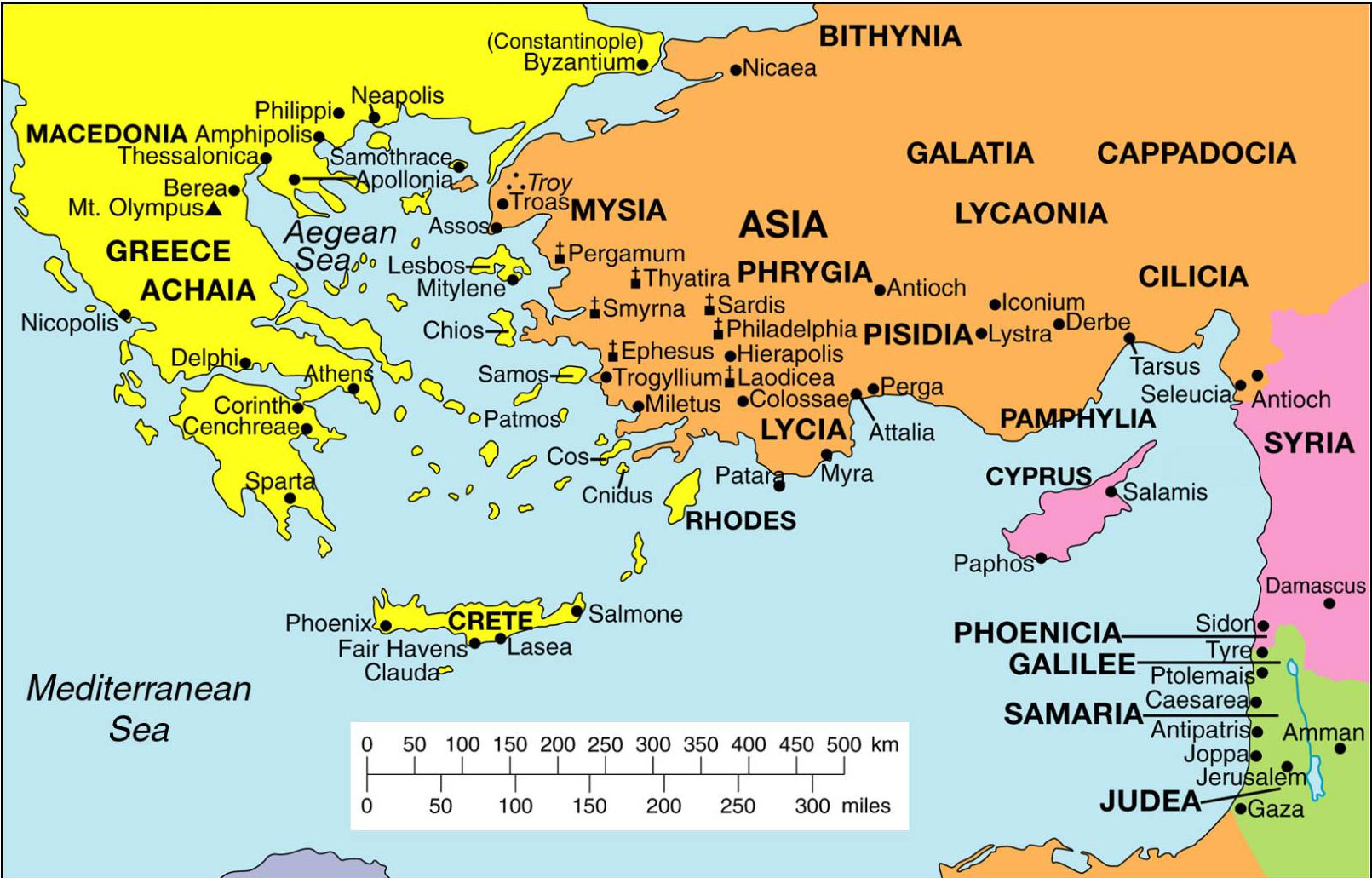
Zechariah’s mention of Darius would have been 417 February 15th. This would approximately be ten years and a month before the Purim war, possibly a reason for the mention of myrtle trees in the first vision. Zechariah saw a vision of riders going out amongst the empire and found the land at peace. The Angel tells him that the Lord is zealous for Jerusalem and Zion and is angry that her enemies remain at peace. The purim war flushed out the enemies of Israel who would have stopped Jerusalem and the Temple from being fully rebuilt. God brought judgement on the enemies of Israel all across Persia (please refer back to the map above to see how vast an empire it was).

Achashverosh was told by an Oracle that a Jew would succeed him. This is why he went along with Haman’s plans to exterminate them. It wasn’t until he discovered Esther was a Jew that he assumed his successor would actually be his son.

I often wondered why Mordecai and other Jews stayed in Persia and it makes you curious as to if Esther’s son took the throne. Was there a half-jewish king of Persia? You’d think Esther would tell her son bedtime stories about their people and teach him the beauty behind the Torah. With the revised timeline and king’s list all this actually makes a lot more sense than before. Why would such a devote man like Mordecai not relocate to Jerusalem if the Temple was rebuilt? Why would Jerusalem not be mentioned in Esther? Things seem to line up better if Esther was taking place closer to the time of Zerubbabel, Zechariah and Joshua the High Priest.

Part 2:

Ezra and Nehemiah are obvious types and shadows of the two witnesses in Revelation.

Rebuilding of the temple after the exile was stopped by Achashverosh. He feared the Jews but would not dare to openly oppose them because Yahweh’s wrath was renown. Haman was the perfect puppet, he was already displeased with Haman for convincing him to kill Vashti who he loved. Achashverosh could simply play dumb and allow Haman to take the fall or if Haman succeeded, he would be rid of the Jews.

Echoes of Glory by Rabbi Berel Wein speak to a different timeline than the standard History and brings us a different king for the Esther story. https://www.abebooks.com/9780899063409/Artscroll-Echoes-Glory-Rabbi-Berel-0899063403/plp

A new great kingdom will rise before the final test, the antichrist on the throne. The Maccabeus war with the Seleucids was the test before Messiah’s first coming and Armageddon will be the test before Yahweh returns and eden is restored. Antiochus is the greatest evil Israel ever faced just as Satan is the church’s great foe. A second Purim like war will take place before the rapture. It will ultimately be a test of faith just as Mordecai urged the people to fast and pray, Teshuvah, turn and repent. There will be actually fighting amongst friends, family and neighbors but it’s ultimately a spiritual battle.

The three signs that the United States is a spiritual Persia today. 1. They have conquered the city of Babylon, a mark that all the empires in Nebuchadnezzar statue had attained. 2. Religious diffusion and tolerance in the United States have been growing since WWII and Persia exemplified the same tolerance where Assyria and Babylon both had patron gods and set belief systems. 3. Both Persia and the United States allowed the Jews to return to Israel.

Knowing a battle is coming allows us time to be preparing spiritually and physically for what will take place even if it does not come to pass. In this type of war, mobility will be most important. Preparing our bodies to travel, having strength and endurance, being able to fast several days while still having energy, training your body to switch into ketosis.

I don’t believe the American president is actually the head of Persia, the United States is just a portion of this expansive one world empire. As Christians, we know all things must come to an end eventually when it comes to the land of the free and the home of the brave. I don’t think it’s an outlandish conspiracy to consider that the right and left may be wings of the same bird who are working together to gain more control. Empires have long ago learned the lesson of depriving their citizens freedom. They need to give us the illusion of freewill while they slowly steal it from us. It seems like everything is building to the type of war that we see in Esther. It’s ultimately not just about the United States but worldwide.

Achashverosh took a different stance than Cyrus. The leader who will come will not openly be against Israel because to defy Israel brings on curses. Achashverosh remembered what happened to Balshazzar when he defied Yahweh. He knew that if he could entice the people to sin their God would not save them. This leader will want a Haman type character to come and fight Israel so he won’t half to. This could be the false prophet.

Persia made certain not to replicate Babylon’s blasphemies toward Yahweh. Syncretism was Persia’s strategy since Babylon and Assyria had enforced a particular religion.

We see the same parallel with the 1st-3rd Riechs which mirror Babylon from Nimrod to Belshazzar. Mandatory faith was a mark of not only Babylon but the Holy Roman Empire which was marked with bloody crusades and medieval attitudes toward faith. The Nazi party wasn’t the only one to persecute the Jews but they marked the end for our modern era.

Let’s pause and look at Zechariah 5 for another witness.

Zechariah 5:1 Again I raised my eyes, and I saw in front of me a flying scroll. 2 He said to me, “What do you see?” I replied, “I see a flying scroll thirty feet long and fifteen feet wide. 3 Then he said to me, “This is the curse that goes out over the face of all the land; for [according to what is written] on one side, everyone who steals will be swept away; and [according to what is written] on the other side, everyone who swears will be swept away. 4 ‘I will release it,’ says Adonai-Tzva’ot, ‘and it will enter the house of the thief and the house of anyone who swears falsely by my name; it will stay there inside the house and consume it completely, even its timbers and stones.’”

Ezra and Nehemiah – types and shadows of the two witnesses Zechariah speaks of. The current exile and return with Zerubbabel are a fulfillment but also are a template for future prophetic unfolding of events. There is a strong parallel between Ezra and Nehemiah being the two olive trees just as revelation speaks of two future witnesses who will perform similar roles. The exile is not complete and there will be a great return one day with Jesus acting as a Moses type figure. In Zechariah 5 we see a flying scroll with two curses on it. The scroll is described as the same length as Solomon’s porch which was lifted a few steps above the inner court and supported two pillars before the golden Temple door where the Torah was usually read to the people in the court. These two curses were against the two greatest commandments: Love God and love your neighbor. When Jesus speaks at Solomon’s porch (colonnade) in John 10 He speaks of being the gate that all must go through, especially teachers and prophets. Thieves climb over the walls of the sheep pen and this is how we will know false leaders—do they recognize Jesus as Messiah and fulfillment of the law? In the second part of John 10 Jesus makes the claim that He is Yahweh’s son and Messiah.

The first temple was destroyed in 586BC because Judah did not love his neighbor by not honoring the jubilee year. Seven sabbatical years would be 49 years and the fiftieth year would be a release of those in debt and also land would be returned to the original owners. 70 years of exile for each sabbbatical year not kept puts us at 1076 which is the year Saul was coronated—if we add those 490 years to the 586 destruction of the Temple. Not obeying the commands surrounding the jubilee year (10 jubilees would have been missed as well) boils down to not loving your neighbor by in fact stealing from them. This correlates with the curse on one side of the scroll Zechariah sees.

“4 ‘I will release it,’ says Adonai-Tzva’ot, ‘and it will enter the house of the thief and the house of anyone who swears falsely by my name; it will stay there inside the house and consume it completely, even its timbers and stones.’”

The first Temple and Zerubbabel’s Temple were both made with cedar beams and large stones. We know Jesus is the word which includes the Torah. He is both blessing and curse to those who live righteously or wickedly. Jesus also answers the Pharisees that the two greatest commandments are to love God and your neighbor.

Feast of dedication of Hanukkah was when Jesus was speaking in John 10. This is significant because before Hanukkah, this feast was used to mark the dedication of the 1st Temple to Yahweh. Especially in the book of John we see Jesus often speaking based on the context of the sabbath or feast that was going on at that time.

Here’s a link to an article from Fruits of Zion. https://torahportions.ffoz.org/disciples/acts/pentecost-solomons-portico-and.html
“On Pentecost morning, some 120 disciples of the Nazarene congregated on the Temple Mount together under the cedar roof of Solomon’s colonnade to welcome the morning of the holy day with prayer. The colonnaded courtyard consisted of a portico of monolithic, white, marble pillars covered over with cedar beams. The portico ran along the eastern wall of the Temple mount, opposite the Mount of Olives. When the Hasmoneans and Herod the Great expanded the Temple Mount, the Kidron valley prevented expansion to the east, so the colonnade that faced the Mount of Olives marked the line of the original Temple Mount from the time of King Solomon. Perhaps for that reason, the people called the portico on that side “Solomon’s colonnade” or “Solomon’s Portico.””

Jesus taught at the place where the Torah used to be read from the door of the 1st temple. The Temple Mount was expanded because the Kidron valley prevented an eastward shift, the Temple was moved west putting the porch of Solomon as a colonnade right inside the eastern gate known as the walled up golden gate today where Jesus will enter Jerusalem on His return as king (also prophesied by Zechariah). The court of the gentiles lay to the west before the Beautiful Gate which lead into the Court of the Women. Today Jews walk barefoot if they ever dare go up on the Temple Mount because they’re unsure of where the holy ground is. It is likely the holy ground of Solomon’s temple was walked on by gentiles and women in Jesus’ day.

The disciples expected Jesus to return as king anytime to offer the final redemption for Israel.

They would have met in Solomon’s colonnade which stood besides the Golden Gate. Remember, Nehemiah rebuilt the walls and gates of Jerusalem. Jesus was perhaps referencing the main gate into the Temple grounds as the way to truth and life. The Temple represents an adherence to the law of Yahweh but without Jesus acting as the Golden Gate we can not enter the Temple grounds. We can only enter into eternal life by accepting Jesus as messiah and obeying Yahweh’s Torah (which is actually Jesus). This is what Jesus was speaking about in the first half of John 10. In the second half we see a tie to the second curse as well as to why the second Temple was destroyed. Blaspheming the name has a lot more to it then using God’s name as a curse word. It has to do with unbelief, to reject Yahweh’s emissary is to reject God Himself. Jesus was the corner stone that the builders rejected and the second curse, from the scroll, against Herod’s Temple went inside it. Perhaps the Jews were given another jubilee’s time to turn from pride and accept Jesus as their messiah. Jesus could have been born two or three years before Herod the Great’s death in 5BC putting the span between the start of Jesus’s ministry and the Temple’s destruction in 70AD closer to 50 years instead of the commonly taught 40 years. Nehemiah rebuilt the walls and gates, Ezra taught the truth of the Torah (Jesus). These two witnesses represent both the physicality of walking in obedience while also having true faith.

These curses against the Temple and Jerusalem are not uncommon theme for the prophets. Those who study Revelation without a strong foundation in the source material that the apostle John himself was relying upon will often come to the wrong conclusions about who Babylon is. YHWH knows that if he removed Jerusalem, the people would be more likely to rely on faith instead of a system. Even though the system can seem righteous it may be an idol that steals our attention. The metaphors in Zechariah are pointing toward the destruction of Jerusalem. My friend has a daughter named Jerusalem and I jokingly asked if he calls her Babylon when she is not behaving. In a way that is how YHWH sees His people. These curses are not meant for a non-covenanted people, they are meant for those belonging to YHWH. The nations will crumble in time but not till Jerusalem has fully been redeemed.

A third temple may not be built, just the morning and evening sacrifices restarted (also pictures of the two witnesses). 2030 is a half 70 year cycle of ten sabbatical years (Shmitah year). Herod’s Temple was destroyed on a half (35 year) cycle and occurred on a 7th year sabbath rest as confirmed by Josephus. (This is why there was little food to be found in Jerusalem during the siege.)

957BC was the dedication of the first Temple. If we add 3000 years = 2043 ..ironically that is about 43, 70 year cycles, 85 for 6000 years and 100 for 7 thousand years. It is 4000 years from creation to the rededication of the Temple in 164. We don’t know how long Adam remained in the garden (the years before the flood simply account for how long Adam lived before having a son). The Edenic state is a picture of the eternal sabbath and should not be counted in the 4,000 years since it is the paradise we will return to after the millennial reign. If 2040 is around the timeframe the Millennial reign starts, Adam could have been in the garden over 200 years before being exiled east and would actually push the 4000 years to right around Jesus’s death. 3000 years of Temple bookended by 1,500 years of darkness where the voice of Yahweh was seldom heard.

Featured

Leaves of the Sadducees:

We’ve looked at the dark history of this group but before we look at their influence today, it is time see what Jesus had to say about them.

If all scripture is God breathed, it should all be consistent. At his hometown synagogue in Nazareth, Jesus’s first recorded teaching was from the book of Isaiah, a book that details the suffering servant like no other piece of Old Testament scripture. Isaiah is also the most quoted from prophet by the New Testament. His use of agricultural metaphors to describe the prophetic future of Israel should be studied right alongside Yeshua’s parables. Of course, we must remember that these visions and parables were given to Isaiah by YHWH and were not just ideas that came to him. I think we need to take the same approach with Jesus’s words. I’ve often heard that the Messiah was simply using terminology that people could relate to or utilizing the scenery about Him to convey wisdom and truth. In Matthew 13, the disciples ask Jesus why he speaks in parables and He gives an answer that makes us think long and hard about what we take away from these parables less we deceive ourselves and become like the Sadducees. (As a side note I think most Sadducees in the upper echelons knew the scriptures and understood exactly what Jesus was saying, making them want to kill Him all the more.)

Matthew 13

10 And the disciples came, and said unto him, Why speakest thou unto them in parables?

11 He answered and said unto them, Because it is given unto you to know the mysteries of the kingdom of heaven, but to them it is not given.

12 For whosoever hath, to him shall be given, and he shall have more abundance: but whosoever hath not, from him shall be taken away even that he hath.

13 Therefore speak I to them in parables: because they seeing see not; and hearing they hear not, neither do they understand.

14 And in them is fulfilled the prophecy of Esaias, which saith, By hearing ye shall hear, and shall not understand; and seeing ye shall see, and shall not perceive:

15 For this people’s heart is waxed gross, and their ears are dull of hearing, and their eyes they have closed; lest at any time they should see with their eyes and hear with their ears, and should understand with their heart, and should be converted, and I should heal them.

16 But blessed are your eyes, for they see: and your ears, for they hear.

17 For verily I say unto you, That many prophets and righteous men have desired to see those things which ye see, and have not seen them; and to hear those things which ye hear, and have not heard them.

What are the mysteries/gospel of the Kingdom of Heaven? I believe Jesus gives us a hint at the very start of his ministry by reading from Isaiah 6, a passage that speaks of Jubilee and the vengeance of the Lord.

Matthew 4

23 And Jesus went about all Galilee, teaching in their synagogues, and preaching the gospel of the kingdom, and healing all manner of sickness and all manner of disease among the people.

Mark 1

15 And saying, The time is fulfilled, and the kingdom of God is at hand: repent ye, and believe the gospel.

I think we can all agree the “good news” spoken of here wasn’t the New Testament gospels, written years later, but in fact, the gospel Jesus speaks of is the Law and the Prophets. It is important that we understand this gospel was nothing new, with no alteration in plans or redirection from YHWH’s original desires. And what were/are His desires? Well, we need to understand that before we can even hope to glean the mysteries from our Messiah’s parables.

If the gospel Jesus spoke about was the Hebrew Bible/Tanakh, wouldn’t be nice if every time He mentioned a certain agricultural term, we could decipher its meaning consistently by seeing how the prophets used the same imagery? Would it not be easier to build understanding of these parables upon such a foundation? It would also mean that Jesus would have to be consistent with how He used these terms as well. E.g. Is the fig tree in Mathew 24:10-17 the same fig tree as mentioned in Mat. 21:18, Mark 11 or the parable in Luke 13? Is He just randomly using fig trees for various different life lessons or is He a bit smarter than our Sunday school understanding has given Him credit for?

Isaiah 5 is Jesus’s source material for the parable of the tenants (mark 12). We see the same vineyard with the fence, winepress, and tower. The one contrast is we see this vineyard did not produce good grapes whereas there is no mention in Jesus’s parable of the vineyard failing to produce good fruit. In fact, there is fruit but the tenants, those who desire the inheritance of the Priesthood and Temple, will not relinquish the good fruit to the owner of the vineyard.

In the wake of the Hasmonean Dynasty, God saw a ripe harvest, a people who were ready to accept the true gospel of the Kingdom of God, good grapes ready for the winepress. However, there was a corrupt leadership that would not relinquish the Temple and Priesthood. In 586 BC we saw, in part, Isaiah’s parable fulfilled because chapter 5  tells us the Vineyard is the house of Israel and the good plant, Judah. But what were the fence, tower, and winepress? If we are to complete the metaphor, wouldn’t it be important for us to know? Why doesn’t Isaiah tell us?

Well, what protected the Hebrews from evil? The Holy law of God. What acted as a signal tower to call upon the Lord through prayer and fellowship meals? The Temple. We have ignored these structures, mentally brushing them to the side in both Isaiah’s and Jesus’s parables. We have focused on the other elements but the backdrop changes everything.

The winepress for Isaiah was the exile to come. The winepress that Jesus points to is Sheol. Isaiah considers the wine a righteous people, Jesus considers the wine a resurrection of a covenanted people.

Now of course producing fruit does not depend on knowledge of the law, nor is a physical Temple for sacrifice needed for a man to walk in righteousness. The exilic period of the two houses caused more good fruit to bud from the vine than was produced while dwelling in the Promised Land. 

Warren Wiersbe once said “We like to use God’s vocabulary but not His dictionary”. In Mathew 4:23 Jesus tells us His message: the Gospel of the Kingdom of God. Are we so clever in our own sight that we have muddled this gospel to be solely about Jesus’s death and resurrection? The Old Testament paints a very clear picture of what this Kingdom was supposed to look like. It’s not 1948 Israel, it’s not a heavenly kingdom but it is a Kingdom which comes down from Heaven, the New Jerusalem. Isaiah tells us many times Jerusalem would be destroyed, not just in 586 BC, not just in 70 AD but a future destruction that is to come on the Day of the Lord. The mountain Jesus is referring to in Mark 11:23, when telling His disciples that if they shall havef faith enough it would be tossed into the sea, was in fact the mountain that held Jerusalem. Mount Zion needed to be cleared away to make way for the Holy Mountain and its perfected Priesthood. Jesus was telling us that He shall claim His inheritance one day and in the mean time we should beware of the tenants who try and deceive us, telling us the kingdom is here or the Messiah has come.

Note: Mark 11 is not the only place where Jesus mentions moving a mountain. After the transfiguration, Jesus also informs his disciples they can move another mountain. 2 Peter 1 mentions the transfiguration event, saying it took place on a holy mountain. Right after this he speaks of the Watchers/angels bound in chains. Hermon, which in the Greek is Anathema, devoted to destruction. Mount Hermon is the highest mountain in Israel, though it shares a border with Syria. It’s 60 miles from the Sea of Galilee and would take at least a day to climb. After the Messiah climbs down, it reads like a crowd was waiting for him and the disciples who were there could not cast out a demon (offspring of the watchers) that had been brought to them. Jesus then says you need the faith of a mustard seed and you can say to this mountain, move and it shall be moved. This account reads slightly different than when he refers to mount Zion, saying cast it into the sea.

A cursory reading of the gospels may make one wonder why most demonic encounters occur in northern Israel/Galilee region but not as much in Judea. Mountains were considered temples by the pagans. Did the Temple in Jerusalem keep demonic forces at bay? In the book of Revelation John implies that demons dwell in Mother Babylon. If Hermon (where the Watchers came down and made their oath to sin with man according to the book of Enoch) was a gateway into YHWH’s land from the evil Kingdoms of the north where Nimrod once reigned, perhaps demons would wander into Israel. In the old kingdom before the exilic period, unclean spirits/demons were rare appearances. Perhaps Jesus was telling his disciples that if they had faith enough, they could move this portal out of Israel to stop the demonic incursion.

Jesus tells us his parables are meant to confuse. The Sadducees would know the parable from Isaiah 5. They would know he was speaking of Israel and Judah. But Jesus depicted a bigger, more fulfilled picture of the vineyard than Isaiah spoke of.

Breakdown of Mark 12’s Parable of the Tenants

Vineyard: Promised Land. We have to take a step back and remember Adam’s role as Melchizedekian King Priest in the Temple (Garden) was to reign over the whole world. Adam’s exile from the Garden, Israel’s exile from the land are all reoccurring themes. The Vineyard at one point, and again after the millennial reign, will be considered the whole earth.

Tower: New Jerusalem. Again, drawing images from YHWH’s original plan, this tower was a structure that contained the garden or at least the tree of life and the tree of knowledge of good and evil. It was a structure that could be taken up into the heavens before the flood fell upon the earth.

Fence: Firmament. We need to draw from the Hebraic understanding of cosmology to wrap our heads around the imagery of the Bible. The fence around the vineyard would be the Rakhia, a hard metallic structure that would hold in the seas and continents.

Tenants:  Sadducees. My research on this group is extensive and ever growing but the desire to hold the inheritance of Jesus was sought by the Watchers (Satan) among them. Sadducees and their predecessors (like Korah and Esau) all sought the Kingship and Priesthood. The Watchers were sent to take care of the vineyard, their offspring and their spirits continued to corrupt man. In their desire to have the Priesthood and Kingship they tried to replicate what YHWH had designed e.g., a tower of their own, a city and kingdom of their own, a priesthood, king/messiah. Jesus knew that soon the Sadducees would kill Him and claim His inheritance, the Melchizedekian Priesthood.

Fruit of the Vineyard: Believers who have righteousness and faith in YHWH. Though the Garden was taken up to Heaven, its seeds remained to grow and cultivate a large crop awaiting harvest.

In mat 3:8 John the Baptist says: “If you really have turned from your sins to God, produce fruit and prove it.”

So, we should all be asking “what would that fruit have looked like?” Fortunately, we have many more parables to tackle and the fig tree is a good place to start.

Fig trees make a few appearances in the gospels, whether in parable form or in reality, and we will look at these different accounts now.

Mat 24:32 “Now let the fig tree teach you its lesson: when its branches begin to sprout and leaves appear, you know that summer is approaching.”

Lesson of the Fig Tree:

 I think a lot of teachers of eschatology will point to 1948 with a focus on either physical fig trees growing in the land or the presence of Jews back in the land again. They cite Isaiah, claiming this is the nation that is born in a day.

We learn about the importance of fruit in Mark 11 where Jesus curses a fig tree on His way to Jerusalem. After flipping some tables at the Temple, Jesus leaves Jerusalem and they come across the same fig tree again that is now withered to the root. Mark also lets us know this was not the season for figs but if we refer back to Mat. 24:32 we should have seen the branches sprouting. In the spring time, fig trees would have edible seeds that travelers could eat when hungry. If these seeds were not present then there would be no fruit come summer.

At this point we run into a couple problems if we try to superimpose Israel over the fig tree but let’s look at the parable of the fig tree before we get into that.

In Luke 13 we get a story about a fig tree in a vineyard that is not bearing fruit. The master in this parable wants to cut the tree down because the past three years it has not yielded any fruit. The gardener asks for one more year to dig a pit around the tree and fill it with manure to see if the tree finally will bear fruit.

We unfortunately aren’t informed to the fate of this fig tree. A common understanding would be that four millennia have passed since creation. King Saul would have been reigning around the time the first three millennia were coming to a close. YHWH would have been justified in taking the axe to the tree at that point but Israel was given another chance. It would be illogical for us to assume God is now done with Israel when for the first two millennia their name didn’t even exist. Again, like we did with Isaiah’s parable of the vineyard versus Jesus’s, I call us to take a step back and look at the bigger picture.

Here’s some problems: If the fig tree is Israel and it got the axe so the Church could take its place, why do we need the lesson of the fig tree. Cannot the now dissolved covenant of Israel be grafted into the church? There is a mountain of evidence against this type of dispensational thinking and it takes a lot of blind faith to cast it into the sea; I digress.

What if we take the stance that the fig tree is the Temple system? Would we be able to logically fit such an idea into all three mentions of the fig tree?

The Temple is a sign of spiritual maturation and religious privileges. Today it is backwards thinking to consider the tabernacle system of sacrifices and offerings a privilege but the more one studies the Temple they see how much we miss out on today in its absence. Ritual purity is tied to the Temple and even Jesus, though perfect, became ritually impure.

The Temple was also a hub of authority that brought protection to its citizens by enforcing God’s perfect laws. It allowed those in covenant to enter into sacred space by cleansing them of ritual impurity. Now this is not to be confused with high-handed rebellion, a sin we’ve all committed. Only the Heavenly Temple, with its perfect Priest can cleanse us of conscious sin, whereas the earthly Temple was designed for unintentional sin.

Let’s be honest, this doesn’t take a lot of detective work. In Mark 11, Jesus sees the fig tree right before He visits the Temple and then happens upon its withered remains right after. Herod’s Temple was magnificent, it looked beautiful from afar but once up close, there was no fruit to be found. It has even been rumored that Herod did not care to make the inside of the Temple beautiful like Solomon but only the outside, which people would see, was the focus of his architectural prowess. Didn’t a priest try to cover his nakedness with fig leaves in the very first Temple? Adam in the Garden of Eden was the first Melchizedekian High Priest who failed and left us in want of a perfect priest to take his place. The Sadducees who controlled the Temple (and oh so desired the priesthood and kingdom) had the leaves that made them appear righteous. They were oh so shiny and ritually pure but they had no fruit worthy of our messiah.

1948 Israel is not a fig tree for it has no Temple and even if it did, Matthew 24:32 tells us that the branches would need to be sprouting. Israel is even more wicked today than it was at the time of Christ. Tel Aviv is the homosexual capitol of the world. Now with that being said I do not believe there needs to be a grand structure like Herod the Great built but there at least needs to be an altar for the Olah Tamid, the daily sacrifices.

If we remember Jesus’ mention of having faith enough to cast THIS mountain into the sea in Mark 11 right after the disciples marveled at the withered fig tree. Again, it doesn’t take much detective work to come to the conclusion that the mountain or mountain range including the mount of Olives and Temple mount is the one Jesus was speaking of. Some, in their desire to label Jerusalem as Mystery Babylon, point to there being seven hills that Zion sits upon. During 70 AD most of the Judean population was gathered for the feast of Passover at Jerusalem as the Torah commands. Their faith was so rooted in the Temple and Priesthood that they were too busy fighting amongst themselves. Idumeans, Sadducees, Pharisees, Galileans and other various sects were gathered inside the walls. When they fought together the Romans could not withstand them but eventually, they split to control different parts of the city and warred amongst themselves, often fighting over the Temple.

Eleazer, who held Masada after the destruction of Jerusalem, told the garrison in his final speech that God had turned his back on Israel because of their sin. They all chose to take their own lives, feeling that YHWH was done with them. Jesus told us that no stone shall be left stack upon each other but I’ve been to the Temple Mount. I’ve seen the Wailing Wall and beneath where Herodian stones from the outer Temple courts were still intact, still forming a large section of wall. We are waiting for a greater destruction of this mountain; it is clear from the prophesies of Isaiah alone.

The fig tree is a symbol of righteousness and Emunah (faith and trust). We need to have trust in the Temple and Holy Mountain above. Jesus was asking his disciples to focus on what the Tanakh promised. Most of Israel had forgotten these promises due to the lies and propaganda of the Sadducees who wanted to hide any mention of a greater priest, priesthood, Temple, and New Jerusalem. 

An even more important question for us to ponder, and try to follow my logic here: If we are grafted into God’s covenant people, we should be looking at the church for leaves and fruit and not those who dwell in a land that will be destroyed to make way for New Zion to set down. Look to the church to have righteousness and the fruits of the spirit. Currently, to me, this means two possible things. The church, who I’ve seen great fruit from, will begin to practice God’s eternal laws as well. I can also see it as those in Judaism may grow more than just the leaves of righteousness but also have the heart which bears good fruit. Both of these groups can be seen in Isaiah 11 as the two sticks that are joined as one. Ephraim and Judah. Beware the leaves of the Sadducees, a tree that bears no fruit, for it will arise in the land in the final days as a deception. The false Melchizedek priesthood did not die at 70AD but has been thriving in the shadows. They are now placed in key countries to bring about a nation state that will set the stage for the Antichrist.

Jannaeus and Hanukkah

He [Jannaeus] was feasting with his concubines, in the sight of all the city, he ordered about eight hundred of them (Pharisees) to be crucified; and while they were living, he ordered the throats of their children and wives to be cut before their eyes. This was indeed by way of revenge for the injuries they had done him; which punishment yet was of an inhuman nature.

            Josephus, Antiquities 13.14.2 (380)[2]

Hannukah Part 2: After the Hammer Falls

167 BC on the 25th of Kislev (December) was when the Greeks defiled the Temple in Jerusalem. Three years later it was rededicated to Yahweh. There is more to this story however. We remember Solomon added an 8th day to the Feast of dedication (2nd Chronicles 7 and 1st Kings 8) just as with the 8th day of Sukkot which first seven days were a festival of rejoicing (Numbers 29 speak of the 8th day of Sukkot as a solemn assembly), with Hanukkah coming to its last day, we need to remember the sobering end to the tale of the Maccabeus.

The Maccabeus initially fought for justice and righteousness but with Judah the Hammer and many of his brothers dying in battle. The remaining Maccabeus in charge of the revolt became power hungry and set up a regime that enslaved God’s people to the Torah and they controlled both the Priesthood and Kingship till the time of Christ (Pompey took control of Jerusalem in 63BC and Herod was set up as King in 37 BC through marriage to a Hasmonean princess, Mariamne). In 99BC a civil war broke out due to this Judaizing oppression as well as many Jews being upset that the Priesthood had been stripped from the line of Zadok (this is up for debate). These Jews that fought against the Hasmoneans even begged the Seleucids to come back to support them. It’s important to note these were not Hellenized Jews but Pharisees that apposed the Hasmoneans.

Alexander Jannaeus the Hasmonean (the first high priest to claim the Kingship, his oldest brother Aristobulus held the title King and High Priest for a year before dying of appendicitis) was at initially defeated but many of the Pharisees that fought against him feared another Seleucid occupation and returned to Jannaeus in hopes of coming to an agreement. Jannaeus was vengeful and continued to fight the rebels even after they returned to him and he captured many of the jews that rebelled. He brought 800 of the men (mostly Pharisees) to Jerusalem and had them crucified and they had to watch while their wives and children were murdered before their eyes. These two branches of Judaism continued to be at odds even during the days of Jesus’s ministry, the Pharisees and the Sadducees. Again at the siege of Jerusalem, still too focused on maintaining control of the Temple and less concerned about seeking God’s will, they killed each other.

Be zealous for God’s commandments but never forget what these laws support, they are a colonnade holding up a roof of love built on a foundation of Messiah.

What a dark time for Jesus to come and be the light of the world. Place His light upon the lampstand, the shamash candle (Jesus) lighting the other candles, igniting the 7 (for the menorah) spirits that should illuminate the world around us. The same spirt that Yeshua had.

Isaiah 11

2 The Spirit of Adonai will rest on him,

the Spirit of wisdom and understanding,

the Spirit of counsel and power,

the Spirit of knowledge and fearing Adonai —

3 he will be inspired by fearing Adonai.

Jesus is the Shamash, His love and faithfulness that spreads the other fruits of the Spirit (hanukkiah 9 branch candelabra)

Galatians 5

22 But the fruit of the Spirit is love, joy, peace, patience, kindness, goodness, faithfulness, 23 humility, self-control. Nothing in the Torah stands against such things.

The foundation of the spiritual Temple is Faith, its roof a banner of love, its pillars are God’s laws that support the structure. If you find yourself keeping a law that supports a structure of hatred, perhaps you’re serving in the wrong temple.

Just as Israel learned during the Hasmonean Dynasty, the perfect Kingdom of God had not come yet. We must beware of false prophets and kings.

The King Priest and the Antichrist (please refrain from casting your lemons till you have read the full post.

Josephus Antiquities XIII

(372) As to Alexander, his own people revolted against him. For at a festival which was then celebrated, when he stood upon the altar and was going to sacrifice, the nation rose up against him and pelted him with citrons 47 [which they then had in their hands, because] the laws of the Jews required that at the feast of Tabernacles 48 everyone should have branches of the palm tree and citron fruits which we have elsewhere related. 49 They also reviled him as descended from a captive and therefore unworthy of his office and of sacrificing. (373) At this he flew into a rage and killed about six thousand of them. He also built a partition wall of wood around the altar and the temple. Beyond that partition it was lawful only for the priests to enter, and by this means he obstructed the people from coming to him.

We will look this peculiar event during the reign of Alexander Jannaeus in relation to Jesus. The Jewish, or perhaps a better term is Hebraic, understanding of Messiah is crucial because a shift happened during the Hasmonean dynasty. Books that spoke of the priesthood to come were demonized by the Hasmonean leaders. We found many of these books among the Dead Sea scrolls but these same manuscripts, which speak of the priesthood, are not part of the Jewish cannon today; a blatant attempt to hide the King Priest. Texts such as the Temple Scroll and Jubilees (Second Temple period – 70AD) have shed a lot of light on the priesthood while also painting a different picture of Judaism than the Mishna 200 AD and Gemara 500 AD.

I was taught growing up that the Jews longed for the Temple system to return. However, Judaism as a whole thinks the Temple system has passed away and sacrifices are done through Torah (Talmudic adherence), kindness and giving to the poor, and emunah (faith/trust in God).

The Essenes were a small class that felt the priesthood had become corrupted and they exiled themselves southeast of Jerusalem and hid among the mountainous wilderness near the Dead Sea. This small group is relative to the number of Jews that are actively working toward restoring the priesthood and Temple today.

Another account of Alexander Jannaeus’ actions during the feast of Sukkot that differs slightly from Josephus’s, spoke of King Jannaeus pouring out the libation offering at his feet instead of upon the altar. For this he was pelted with citrons (large lemons that were part of the lulavs waved during the feast) and he proceeded to have 6,000 of his own people slaughtered. The pouring out of the water libation is reported in the Mishna but the priest who did this is not named and some have attributed this event to Jannaeus.

According to Jeffrey Rubenstein’s article, The Sadducees and the Water Libation, the theory that Sadducees were Torah literalists who believed the water libation was an addition to scripture frankly doesn’t hold water, pun intended. Rubenstein goes through several theories regarding why a priest would not pour the wine and water libations on the altar and he is adamant there must be another reason besides negligence or disdain for the practice.

The scrolls found in Qumran all advocate for a pouring of the libations upon the altar since passages like Numbers 29 mention the drink offerings but does not specifically state they are to be poured on the altar. Rubenstein also mentions the offering being a pleasing aroma would indicate that it be burned with the sacrifice. Sukkot had the most sacrifices of any festival and these animals were not just to be completely burnt but cooked and portions were given to the priests. Water, wine and grain could all act as seasoning upon the meat as it was cooking, a fragrance the attending crowds would smell.

At this same festival, Jesus pronounce himself the King Priest. The Messiah spoke of being the light of the world, the water of life and at Hanukkah He declared Himself to be the son of God but unlike Antiochus IV and Jannaeus he did not come with the sword. Under Jannaeus’ rule the atrocities of Antiochus IV were still fresh in the mind of every Judean. Regardless of whether it was the King Priest’s offering of a sacrifice or pouring out the libation at his feet, a great outcry was sparked that led to an unjust slaughter and civil war. 

It could be argued that Jesus’s death sentence and Jannaeus’ fruit flogging were causalities of the nation’s heightened fear of a second round of Antiochus IV. However, I lean toward the theory that Jannaeus knew of the King Priest to come, shoes he desired to fill as he poured the libation at his feet, anointing himself instead of the altar. Judaism lacks the understanding of the priesthood that the Pharisees attending this particular Sukkot likely had and it is in part the fault of Jannaeus and other likeminded Hasmoneans and the Herodians who wanted to control the priesthood for political gain and control of the populace through religion. This required the removal of any texts that spoke of a King Priest and this disconnect cripples many in Judaism today from understanding how Messiah could first come as a man to fulfil the role of High Priest in the Heavenly Temple before He came as Israel’s promised King.

I would wager the Pharisees knew exactly what Jannaeus was implying with the water libation. Upon my first reading of the account in Josephus I was astounded that these rebellious Judeans would employ the help of their former foe, the Seleucid empire to help them fight against Jannaeus but now I see the picture a little more clearly. Jannaeus was another Antichrist figure but unlike Antiochus he was a wolf in sheep’s clothing.

During the Feast of Dedication, Solomon set the sacrifice in the courtyard of the Temple because it was too large to be placed on the Altar. Also, Elijah set up an evening sacrifice outside the Temple. God ordained His Tabernacle system but sacrifices outside that system had to be shown that God approved of them by fire from heaven. Interestingly, the Antichrist is said to have this power in Revelation. Does this mean he will act as priest and king? Will even the elect be fooled by the heavenly flames that ignite his offerings? At times it pays to be a Pharisee at the Feast of Sukkot with citron in hand, knowing that our King Priest comes with an army of angels and He brings the New Jerusalem with him.

The water libation ceremony is a prayer to Yahweh for rains come next year, given in thanksgiving for the harvests throughout the year. It is also a time where God judges the world. We know Tabernacles is picture of what the millennial reign and eternity with the Father will look like. The promised kingdom of God with our High Priest and King in charge of the great city. Jannaeus understood the prophecies and sought to usher in the eternal kingdom before God’s timing. Paul’s letters encourage believers to not let their longing for the kingdom of God stop them from living like it has already come. We are called to continue to love, act glorified even without our glorified bodies and act as if we are saved even though the Messiah hasn’t yet come to physically save and redeem us.

In the Judean mindset, Messiah will not come back until the perfect kingdom is set up for Him. Radical Zionism, setting up the kingdom by any bloody means possible has been shown to fail with Jannaeus, with Herod the Great, with the rebellions at 70AD and 132AD. Even with Israel reestablished as a nation now, hopes are high for a return soon but the Lord will flatten the Promised Land to make way for the promised kingdom so no man can say he built the city of God.

The Melchizedek (King of Righteousness) mentioned in Hebrews is our true King-Priest. Even Adam failed in this role, only one man can fulfill the demand for a perfect, obedient High Priest that offers atonement for all Israel.

Let the lemons fly at any shepherd who does not come through the gate. If you agree, comment a lemon below.

Marriage Permanence Exposed

Do Jesus and Paul speak hyperbolically? Any reader knows the answer is a well-supported yes. The typical problem is most people don’t actually read the whole book to get context or even the feel for how a writer engages his audience and why he engages them in such a fashion because cultural context and background is infrequently studied. It’s like meeting me for the first time, my humor is so dry those who don’t know me may not pick up on it even in our current culture but if you recorded exchanges I’ve had and played them for people 2000 years in the future they’d be likely very confused even if they spoke the same language. They would think I’m contradictory, harsh or stupid especially if I was arguing Torah observance and was attempting to shock and confuse those who were debating me. We need to understand Paul and Jesus’s phrases and we need to understand cultural themes and references and ultimately their many different audiences because guess what… you weren’t one of those. We like to throw around the phrase “the Bible was written for you but not to you” but we really don’t apply that logic very often. Now don’t get me wrong there are times scripture is written to you because Jesus and many prophets and some apostles wrote to future generations, yes that’s you. Paul wrote to many different churches and synagogues but not to “the church.” Jesus spoke to future generations at times but the audience He felt he needed to speak most hyperbole to was the various religious sects of Judaism that like to follow Him around and bring up challenges.

I’ve been enjoying my journey through the Bible the past year while using the NRSV cultural backgrounds study bible. I highly recommend it and I will exclusively be sharing its notes on our verses of discussion.

Before we go further let’s point out the moral issue most people have with marriage permanence doctrine:

Two wrongs don’t make a right. Even if a divorce was done for non-biblical reasons and that divorce person remarried, should they commit another sin by abandoning their family and break up the parental structure that kids so desperately need?

The common response to this would be “what if a homosexual couple realized they were living in sin, should they just stay together? What if they had adopted kids?”

At first glance this seems like a strong counter but a man and a man are not a parental structure nor is a woman and a woman. Homosexuality defies the natural order and I wouldn’t say it is a greater sin than adultery but it goes against what God has established as well as many other laws He has set forth. The first of those laws being, go forth and multiply. So, it’s comparing apples and oranges really.

Divorce is a terrible thing. It may or may not be sin depending on the situation. Sin has consequences as Moses warns “I set before you blessing and cursing. Blessing if you obey and cursing if you do not.” Most of my life I’ve spent trying to figure what is a blessing and what is a curse and what I’ve discovered is Yahweh’s plan for us is so perfect that each trial we face is a blessing if we choose to see it that way because He is always working for our good. That ‘good’ may not feel so pleasant at times but once you look back over your journey you will see how you have climbed to greater heights.

I’ve come to the realization that marriage is about holiness and not happiness. If God placed two people together and they were happy and always got along without fights, neither would grow, neither would seek after God and His word because they would be solely content in each other. Yahweh’s relationship with us is not based on what He can get out of the contract but based on what He can give and how He can keep on loving despite what we have done. Marriage will help you understand the Father’s heart if you allow it to but even with these words I hesitate because there are certainly situations where no growth can take place. Same is in the spiritual realm, there will be those who refused to enter a covenant with Yahweh or refuse to obey the laws of that covenant. They will be like the unwise virgins in Jesus’s parable and not get to enter the holy city on that great day. The same is with divorce, there are wicked men and women. There are those who lose faith and demand to leave. We must use discernment as we listen to Jesus and Paul and remember that their gospel was the Law and the Prophets. The first 2/3 of the Bible has always been the good news and the promise of the coming kingdom, the gospel of the kingdom of God. We must understand the beginning to really connect with the teachings of Paul and Yeshua.

Even when Jesus said Moses allowed divorce because of their hard hearts, we miss the meaning. It wasn’t about allowing that man to leave his wife because he was not content but freeing his wife from an unworthy husband. Even a thing like slavery would be a good comparison. Slavery will not exist after the millennial reign and neither will divorce. Slavery based on Torah existed as a way for someone to work off debts or learn a trade skill and wasn’t as vile as other later historical examples but still it showed a fallen state. We live in a world with evil people and that leads to suffering for others. God will allow trials to grow us but will deliver us from evil.

Examples of Jesus using hyperbole:

There’s a lot more of course but these were just a few I noticed that were likely spoken to or within ear shot of the same Rabbinic challengers that brought up the marriage questions.

Mathew 5:22 and whoever says, ‘You fool!’ will be liable to the hell of fire.

… obviously you’re not going to hell for calling your little brother stupid in the 2nd grade.

Mathew 5:27

But I say to you that everyone who looks at a woman with lustful intent has already committed adultery with her in his heart. If your right eye causes you to sin, tear it out and throw it away. For it is better that you lose one of your members than that your whole body be thrown into hell.

Most catch the meaning Jesus is throwing at us and do not reach for a cleaver every time they sin but cleave to God and repent. This is either striking hyperbole or there should be a lot more limbless, eyeless people hobbling about.

Let’s move on, you get the gist.

1 cor. 7:15 But if the unbelieving partner separates, let it be so. In such cases the brother or sister is not enslaved. God has called you to peace. For how do you know, wife, whether you will save your husband? Or how do you know, husband, whether you will save your wife?

In my experience my ex-wife wanted to leave and I fought for her to stay. Could I have been a better spiritual leader in the past? Could I have fought harder? Should I have remained single until the divorce was final? Yes, yes, and yes. But ultimately, despite all my sin and failings, I and others like me are called to peace. We are not enslaved in our past marriages and if we were still bound not to remarry that is still enslavement to that other person. Many sins on both parts led up to the collapse of my first marriage and that tore God’s heart out to see and mine as well but He not only forgives but gives second chances. There are consequences and there are few good reasons for divorce but they do exist. People get left, people can be in physical danger or facing a wicked narcissistic person and you don’t have to justify yourself to anyone but God and perhaps your pastor because we lack a Levitical priesthood and its associated judges.

In my case I knew enough scripture at the time of my wife leaving to fight because I knew I protected her salvation despite her unbelief. Convicted of this I encouraged we go to counseling but she still drafted the paperwork and like the scripture encouraged, I let her go because she desired to leave. Divorce should be a last resort and only done when advised by a leader in your congregation that you have sought council with.

NRSV Cultural backgrounds bible note on 1 cor. 7:16

Not bound. What happens when the marriage is dissolved against the believer’s will? In divorce contexts, the meaning of “not bound” is clear; this was the precise language in Jewish divorce contracts for freedom to remarry.

The more someone knows Torah the more confusing they may appear. Paul spins our heads and Peter warns us to read the student of Gamaliel’s letters while planting our feet firmly on the foundation of the law. Jesus, self-proclaimed riddle master, takes the cake however and we must be even more grounded in the Tanakh than even a pious pharisee. If we recall, when asked about His parables by the disciples, Jesus responded by telling them the Pharisees hear but never perceive.

Mathew 13:10 Then the talmidim came and asked Yeshua, “Why are you speaking to them in parables?”

11 He answered, “Because it has been given to you to know the secrets of the Kingdom of Heaven, but it has not been given to them.

12 For anyone who has something will be given more, so that he will have plenty; but from anyone who has nothing, even what he does have will be taken away.

13 Here is why I speak to them in parables: they look without seeing and listen without hearing or understanding.

14 That is, in them is fulfilled the prophecy of Yesha`yahu which says, `You will keep on hearing but never understand, and keep on seeing but never perceive,

15 because the heart of this people has become dull — with their ears they barely hear, and their eyes they have closed, so as not to see with their eyes, hear with their ears, understand with their heart, and do t’shuvah, so that I could heal them.’

16 But you, how blessed are your eyes, because they see, and your ears, because they hear!

17 Yes indeed! I tell you that many a prophet and many a tzaddik longed to see the things you are seeing but did not see them, and to hear the things you are hearing but did not hear them.

Luke 16:18

Everyone who divorces his wife and marries another commits adultery, and he who marries a woman divorced from her husband commits adultery.

Cultural backgrounds bible note

Luke 16:18 and Mat 5.31 certificate of divorce. Cf. Deut 24.1; such a certificate allowed a wife to remarry; the key element of such certificates was the phrase, “You are now free to marry another man” (sometimes abbreviated, “You are now free”).

5.32 except on the ground of unchastity. One school of Pharisees (the school of Hillel) allowed divorce for any reason; the other (the school of Shammai) allowed it only for “sexual immorality” (as here). A legal divorce permitted remarriage, but without a valid divorce, a wife’s new marriage was invalid, hence adulterous. (In a Jewish legal setting the wife’s divorce was more at issue than the husband’s because Jewish law in principle permitted men to have multiple wives.) Jesus here depicts divorce as invalid, apart from the partner’s infidelity. Because Jesus often used graphic hyperbole (see note on v. 30), offered general statements that might be qualified in some cases (see note on 1 Cor 7.15), and elsewhere treated the dissolution of marriage as genuine (though normally wrong; cf. Mt 19.6; Jn 4.18), some view the present statement as hyperbole. Hyperbole was meant to graphically reinforce the point, here the warning against breaking one’s marriage.

Like Paul, Jesus can offer some staggering statements as the note above suggests. Aggressive language to make a point was common one of my favorite examples is when Paul tells the circumcision party to fully castrate themselves. Paul wanted to shock his intended audience to make a point and it calls to mind Jesus’s comments on eunuchs in Mathew 19:12.

John 4:18

for you have had five husbands, and the one you now have is not your husband. What you have said is true.

Great time for Jesus to address marriage permanence but He does not. Most will assume she is not in covenant with this 5th man or is still legally bound to the fourth. Jesus only discounts the 5th and unless the first three are all dead He should have said something in this particular instance… like “return to your first husband.” This calls into question instructions pertaining to the Torah about how a man cannot remarry the same woman if she has moved on and married another man—how could she marry another? That marriage isn’t real it’s just adultery, right? Why call it marriage? And then why can’t she go back to her first husband if it was just adultery—unless you’re dumping the mosaic law altogether which most have to if they are to rationalize marriage permanence. Replacement theology is a whole other argument but this study is meant for readers with a messianic understanding.

Mat 19:6

So they are no longer two but one flesh. What therefore God has joined together, let not man separate.” They said to him, “Why then did Moses command one to give a certificate of divorce and to send her away?” He said to them, “Because of your hardness of heart Moses allowed you to divorce your wives, but from the beginning it was not so. And I say to you: whoever divorces his wife, except for sexual immorality, and marries another, commits adultery.”

The disciples said to him, “If such is the case of a man with his wife, it is better not to marry.” But he said to them, “Not everyone can receive this saying, but only those to whom it is given. For there are eunuchs who have been so from birth, and there are eunuchs who have been made eunuchs by men, and there are eunuchs who have made themselves eunuchs for the sake of the kingdom of heaven. Let the one who is able to receive this receive it.”

Cultural backgrounds bible note

19.5–6 Teachers sometimes challenged other teachers’ interpretations of verses (here some Pharisees’ understanding of Deut 24.1) by appealing to other texts that contradicted those interpretations. Jesus here appeals to Gen 2.24.

19.3 divorce his wife for any cause. Jewish teachers in general regarded divorce as tragic but the choice of the husband; they would not normally interfere. Although wealth could buy exceptions for powerful women, the usual Judean custom was that only the husband had the option of divorce. (If the husband were abusive, however, a court could force him to grant his wife a divorce.) There were two schools of thought among the Pharisees: the school of Shammai and the school of Hillel. Shammaites outnumbered Hillelites in Jesus’ day (unlike after AD 70), but various ancient sources suggest that on the question of divorce the Hillelite view probably reflected the dominant practice in the larger society (cf. Sirach 25.26; Josephus, Antiquities 4.253; Life 415, 426). Shammaites interpreted the grounds for divorce in Deut 24.1 (“something indecent about her,” emphasizing indecent) as a reference to the wife’s unfaithfulness; by contrast, Hillelites emphasized the word something and believed that a husband could divorce his wife for any cause (rendered here “for any and every reason”). Some sages recommended divorcing a disrespectful or disobedient wife (Sirach 25.25–26). Although few husbands would have taken advantage of the rule, Hillelites graphically claimed that a husband could divorce his wife even for burning the bread; a later Hillelite rabbi added, “or if he finds someone more beautiful” (in the Mishnah see Gittin 9.10; Sipre Deut 269.1.1).

Sirach or Ecclesiasticus is a second temple writing of wisdom literature akin to psalms and proverbs.

It was written in Hebrew in Palestine around 180–175 bce by Ben Sira, who was probably a scribe well-versed in Jewish law and custom. Sirach is found in both the Codex Sinaiticus and the Codex Vaticanus, the two oldest complete Christian Bibles in existence. (Both of these codices are bases for the Nestle-Aland Critical Text, upon which most modern Protestant Bible translations are based). Sirach was included not only in the original 1611 King James Bible, but even in Calvin’s 1560 Geneva Bible. The book was not expurgated from the King James Bible (along with the other deuterocanonical books) until the early 19th century. It can still be found, however, today in all Catholic and Orthodox Christian Bibles, along with a handful of Bibles that are considered to be more or less Protestant (e.g. RSV), albeit in special editions.

Sirach 25 speaks of the wicked woman and how the virtuous man must put her away and give her a certificate of divorce. Sirach describes what we refer to as narcissism today, this is a woman who will not change, will never see who she truly is but is hellbent on destroying those who defy her. It’s actually a great chapter in a great book of wisdom, I give it 5 stars.

Sirach or even Josephus cannot be brushed aside as they give us a glimpse of Torah adherence right before and after Jesus’s ministry.

Cultural backgrounds bible note

19.4 Have you not read . . . ? Jesus’ question would insult the Pharisees. Nevertheless, his line of argument would be hard to discredit; many other Jewish thinkers of this period found divine ideals in the creation narrative. The Qumran sectarians, e.g., used Gen 1.27 (cited here) to prohibit kings from marrying multiple wives (Damascus Document 4.20–5.2; Temple Scroll 56.18–19). For many Jewish people, the ideals of the “beginning” also foreshadowed the future kingdom.

The messianic kingdom is the area of study I love, a return to the Edenic state. That’s a topic that gets me excited because we will watch our fallen world be renewed from the walls of the New Jerusalem. God’s original plan and vision for us will be returned and we can only guess at how it will look then and if marriage will even exist in some form. This is YHWH’s heart and His perfect law reveals His nature and love for us. The law (the behavior of the Father) will exist in the future kingdom, it has to. Jesus and Paul can only add understanding to the law, they cannot add or take from it. Also, marriage permanence clearly does not fit YHWH’s heart because of the chaos it would cause to the families and children of parents that were convinced they should walk away from their marriage because one or both of them had been divorced.

Mat 19:9

And I say to you: whoever divorces his wife, except for sexual immorality, and marries another, commits adultery.

NRSV note

19.9 commits adultery. Viewing remarriage as adultery treats a first marriage as indissoluble in God’s sight. This was shocking hyperbole, however, since Jesus’ point is that marriage should not be broken, not that it never is broken (see v. 6). Shammaites allowed divorce only for grounds of unfaithfulness; Jesus sides with them as against the many others who allowed it “for any and every reason” (v. 3; see note there). (The other NT exception, in 1 Cor 7.15, also involves a matter beyond the believer’s control; the principle common to both passages seems to be that believers should never break their marriage covenant, but that neither are they ultimately responsible for the other partner doing so.)

Mat 19:10

The disciples said to him, “If such is the case of a man with his wife, it is better not to marry.” But he said to them, “Not everyone can receive this saying, but only those to whom it is given. For there are eunuchs who have been so from birth, and there are eunuchs who have been made eunuchs by men, and there are eunuchs who have made themselves eunuchs for the sake of the kingdom of heaven. Let the one who is able to receive this receive it.”

 NRSV note

19.10 better not to marry. Ancient marriage contracts often included a clause specifying what would happen in case of divorce. Because parents arranged many marriages, and many Galilean couples had no unchaperoned time together before marriage, the disciples fear the prospect of marriage with no escape for difficult circumstances.

19.12 eunuchs. Although eunuchs in Near Eastern royal courts could exercise power, Greco-Roman society often ridiculed eunuchs as effeminate or “half-men.” Jewish people abhorred castration, and eunuchs were excluded from the covenant (Deut 23.1). Speaking figuratively of long-term singleness, Jesus explains that there are some “who choose to live like eunuchs for the sake of the kingdom of heaven.” Apart from some Essenes, most of Jesus’ Jewish contemporaries regarded marriage and rearing children as an important duty.

Even atheists will stand behind the obvious moral law that a child needs a parental structure. How could Jesus speak of the importance of children right after expressing a wish for marriages to dissolve? Because marriage isn’t about happiness, it’s about holiness. No matter how alike, two partners will have to sacrifice much in a marriage. They will grow and learn more about loving others and even more about how to improve oneself because your spouse becomes a mirror to show you things you were unaware of before. This is righteous living that draws us close to the person God desires us to be and also gives us a glimpse at how our Father loves us unconditionally.

Mat 19:25

 “Who then can be saved?” But Jesus looked at them and said, “With man this is impossible, but with God all things are possible.”

If we read on just a little bit further, we see this promise. Ultimately, we all will have many failings in our lives, divorce makes us unclean but Jesus restores us as our High Priest.

Heretics 22:22 if a man divorces His wife he is not to take another wife while his first wife is still alive for this is adultery and there is never a good reason to divorce a wicked woman.

We should see something like this included in God’s prefect law if this was the case. It’s simply not there amongst laws that go into some great detail and specifics because fornication and adultery are things that not only make people unclean but cast a shadow of sin over the whole congregation. If Yahweh took the time to explain a man should not lie with an animal, it makes sense He would take the time to breakdown this form of adultery as well.

So, what was Jesus trying to say to this legalistic sect that believed they were righteous by their own strength? Earning their own salvation if you will? He was making it clear that all Israel is adulterous and that we all need a savior. Take the man who ask what more he should do to be saved since he has kept the Torah since he was a boy. Jesus tells him to give up all his wealth to follow Him. Are we all expected to walk away from our families and leave then destitute? No, in most cases that would be evil and unloving toward our families to do. It’s a good idea to bring this up because after Jesus shows so much favor to children after throwing adulterous practices in the Pharisees’ faces, this rich man comes up to Him. Jesus is already on fire from His day of arguing the law so let us review what He says.

Mathew 19:16

16 iAnd behold, a man came up to him, saying, “Teacher, what good deed must I do to jhave keternal life?” 17 And he said to him, “Why do you ask me about what is good? There is only one who is good. lIf you would enter life, keep the commandments.” 18 He said to him, “Which ones?” And Jesus said, m“You shall not murder, You shall not commit adultery, You shall not steal, You shall not bear false witness, 19 Honor your father and mother, and, nYou shall love your neighbor as yourself.” 20 The young man said to him, o“All these I have kept. What do I still lack?” 21 Jesus said to him, “If you would be pperfect, go, qsell what you possess and give to the poor, and you will have rtreasure in heaven; and come, follow me.” 22 sWhen the young man heard this he went away sorrowful, for he had great possessions.

I know this comes a bit out of order because we’ve already had a look at what Jesus says after this to His bemoaning disciples. Our Messiah dropped many hard challenges and very few today are living this intensely devoted life. How many do you know living on nothing in the mission field? How many divorced and remarried do you know in the church? How many enjoy no pleasures such as eating out, alcohol, or many of the comforts of this day? It’s obvious we are supposed to raise an eyebrow here and keep reading. Anyone in the Messianic community is familiar with how the Torah upholds and protects the family structure. Is Jesus and Paul now ripping that apart? Can rich people truly not make it into the Kingdom from Heaven?

Greater Works than these?

I honestly know little about the world of signs and wonders but I’ve heard an argument recently that division has caused miracles to cease. I believe we need to pray in the will of God but I’ve been raised a bit of a cessationist—to be expected in a north eastern Pennsylvania Baptist community. I’ve always wondered about praying for things that maybe God doesn’t want me to have. Would things have been better if Hezekiah did not ask for a longer life? Who knows. I’m not going argue about praying more or believing Yahweh can do great things, but I think we can all reflect more on His will and the bigger picture. If you are living a righteous life (being obedient to the heart of Yahweh’s commands) a great many things that you don’t want to happen are going to happen because He is going to be trying to grow and change you.

James 5 talks about the prayer of the righteous man having power and a few questions come to mind:

Does the righteous man’s prayer look different than he who doesn’t truly know his creator?

Does the righteous man have righteous divisions with his brethren? Better yet what is a brethren?

Some of the greatest miracles were performed when there was discord. Elijah prayed for the rain to cease for three years when he was certain there was no one left that followed Yahweh; even though he was assured there was a remnant of 7,000. He considered Israel his brethren but judged them harshly.

It is true the apostles did great miracles but the true miracle, and the one that mattered most, was that they showed the truth of the gospel of Jesus Christ to so many. They caused more people to trust the messiah in one week than Jesus did throughout his whole ministry. As Jesus himself said after healing many, these people seek signs and wonders but they will see no sign but the sign of Jonah. Jesus taught that it is better for one who has not seen to believe. Only one of the ten lepers that Jesus healed came back to thank him.

Sign of Jonah: the book of Jonah is a very odd account if we look at it historically and paralleled with the narrative of the Bible it seems out of place. The Queen of the south and Nineveh are spoken of by Jesus to stand as a testament against Israel. In Jonah, the Assyrians repented when the Northern Kingdom would not. These events are contrasted by the sign of the Queen of the South, which may be a reference to the Ethiopian Queen who took the wisdom of Solomon and brought it to her land—we can only assume this was the wisdom of the Torah (the lost book of Enoch was found in Ethiopia before it was recovered among the Dead Sea scrolls). Wisdom is useless if not applied as in Solomon’s case and we can see this unfortunate truth replaying once more with the Pharisees and Sadducees who’s heads were so filled with knowledge but allowed it to corrupt them. Sheba took the Torah and applied it to her kingdom in a way that it would benefit the people instead of control them. Nineveh had not the Torah but took it on faith that this Yahweh—who had destroyed the Egyptian army and their own ancestors’ Assyrian army of the four kings that Abram defeated with only 318 men—had the power to lay waste to the Capitol of the strongest empire of that time. An empire that would soon take the northern kingdom of Israel into captivity about some 40 years later.
The testament against Israel, if the thoughts above are correct, is that those who do not repent will be destroyed and those who do must learn to follow of the wisdom of the Torah or face future destruction like Nineveh in Nahum.

Some divisions in scripture that come to mind just off the top of my head:

Job and his friends. Not the shiniest example of one-accord but all had a lot to learn. Even the most righteous man to live had friends ready to judge him for sins and situations they knew nothing about. Even the most righteous man to live still has a thing to learn from his Creator. He sat and listened to his accusers, which showed wisdom. Perhaps, he refuted their arguments with a bit more pride then he should have but it’s hard to remain stoic in such situations.

Peter and Paul, apparently they reconciled but Peter still focused his ministry on Judea and the Galilee while Paul went to the synagogues in the dispersion. This too fulfilled the sign of Jonah, Jesus remained three days in the heart of the earth as Jonah remained in the whale only to come out and preach the word to unlikely converts just as Paul reached out to those scattered about the lands once controlled by the same Assyrian empire that was spared Yahweh’s wrath. The story of Jonah is less about Yahweh sparing the wicked but more about teaching Israel that He is able to save if only they had the faith and heart to turn and repent, showing them it was not about bloodline but being adopted into Kingdom of God… a lesson many Jews are still failing to learn and even many Christians who only care about their image.

Abram and Lot (now we can wonder about if Abram should have even saved Lot because we got the Ammonite and the Moabite people from Lot’s two daughters. To be fair they probably thought the whole world had been nuked and they needed to start over but even with that sin we see God use it for good because Ruth was a Moabite. “Was” being the key word because once she married she became an Israelite. Her first husband died but a kinsman redeemer “saved her”. A picture of Jesus being married to Israel then divorcing them and dying so He could be that redeemer.

The Northern and Southern Kingdoms of Israel: We can blame Solomon but ultimately no king could handle reigning over Yahweh’s people. There was only supposed to be one king and that was Yahweh/Jesus. Exile and division were the refining fire that burnt out the impurities of the Hebraic kingdom. Look at what God allowed to happen to His people. It’s the love of a father who corrects His child. We spend too much time praying for blessing when we should be praying for correction.

Paul and Barnabas: I see this as a healthy split and a picture of what the modern church should look more like. Barnabas had instructed Paul and now Paul needed to go out on his own to train others that would continue to replicate themselves.

Is the Protestant reformation a sinful split? Should we have stayed under the Pope just to be in one-accord? It is a common Jewish teaching that if all Jews everywhere kept Sabbath that Messiah would come immediately. This mirrors some of the new apostolic church’s claims that Jesus will only come back for a full bride. I think we need to realize He’s coming back for a refined remnant who has faced both exile and exodus and have arrived at the border of the promised land reborn.

Ultimately, because of the book of Revelation we can assume, and to use a Pauline expression, not all in the church are of the church. So it makes sense that dividing from false doctrine is healthy because not all battles can be won by staying in one-accord. What communion does light have with darkness?

Is division always good? no, but it’s the design of the church system. The apostolic church planting had a few purposes:

To spread the gospel. The Temple system and Judaism had become corrupted. Rabbinic teachings are not all bad. Midrash is what Rabbis would do with a piece of scripture to interpret a meaning. Jesus did a lot of this as well (we just know that His interpretations were divine since He was the living Torah). Rabbis would come to some good conclusions because there would be circumstances that were not clear enough in scripture. There were three major divisions of Judaism at the time of Jesus’s ministry and they were the Pharisees, Sadducees and the Essenes. Legalism had become a weapon of the Sadducees—who were generally power hungry and controlled by the Herods but it seemed to have come from a righteous desire. The holy kings (Hasmoneans) that followed in the footsteps of the pious Maccabees who fended off the religious genocide of the Seleucid invaders, were devout in their attempts to make sure the nation lived in an upright manner. If the Babylonian exile and the horrors of Antiochus Epiphanies taught the Jews anything it was that sin brought curses and would cause them to face more trials. Rome didn’t conqueror Judea however, they were allied during the decline of the Greek empire. Through the plotting of Herod the Great, the Roman Empire was given a foothold in the region that was strengthened even more after Herod’s death because Rome saw the kingdom as unstable and eventually they divided it into the tetrarchy of Jesus time. Legalism is often described as trying to earn salvation but in the Jewish mindset there was no concept of heaven or hell as far dwelling there. The Sadducees didn’t even believe in a resurrection of the dead. Jews were simply trying to obey the laws Yahweh had set before them. In places they expounded upon these laws or missed the heart of them but it was a noble attempt. The bigger and more profitable the kingdom of Israel became the more the king was tempted to trade righteousness for riches. Herod professed to keep Torah but he appointed his own priests that aligned with his desires instead of honoring the heart of the Torah. it became even more political at the time of Jesus and what was once a system that honored Yahweh had become corrupt. The apostles still honored the Temple but knew they were called to divide from it and Jesus’s Olivet discourse had given them a glimpse of what would befall it in the future. This division was for the best. We can’t look at Jesus starting a new religion because He would fail the Deuteronomy 13 test. He came to show those in Judaism a better path and to die to redeem the lost sheep of Israel. We see the same dichotomy in mega churches today when the design of the house church was to grow then have a healthy split and a chain reaction that would spread the gospel like wildfire but would also advance the understanding of the believer. It was less about having someone who preached and more about everyone learning together and having discourse and battling out the hard topics. Growth not just in numbers but growth in an understanding of the heart of Yahweh. Quality over quantity is definitely a desire of our Creator. The book of Baruch dives into that concept quite well.

In our modern day we are a people in exile. We are not in the land promised to us and that comes with curses and part of the reason we don’t see miracles but a decaying society. Every empire that tried to hold the Jews eventually decayed or was conquered. Jews were even considered a pestilence and were driven from Spain, Russian and Germany because every where they went they received blessing and those who did not live according to the word of Yahweh received curses. Beyond this it was the sharp contrast of two different mindsets. The darkness will hate the light, it will call it evil and false in hopes that it will burn out and if all else fails it will strive to snuff it out with a “righteous” crusade.

The greater works that we are seeing is that the word of Yahweh has spread to so many lands and the scales have been removed from so many eyes. Like Ezra and Josiah who read the Torah before Israel, many have wept at the error of their wickedness and have turned in a heart of stone for a heart of flesh.

The prayer of the righteous man will do great things, but will signs and wonders make a man believe in Yahweh? Israel saw the greatest of miracles and believed but like the 5000 who were fed, many believers are simply left wanting more and seek after other gods because they are more focused on what they can get out of the relationship than what they can give. (yes many churches today seek after other gods in different forms such as applying eastern mysticism to their teachings). We need to be more than believers in Yahweh, we need to become a righteous priesthood. Pray in the will of God, pray that people would have Yahweh’s understanding less they waste away on the milk of miracles.

We’re all the Lost Sheep

Jesus is not Confucius or Gandhi, we can’t just take what he says and put it any context to make a point.

Before we analyze any parable it’s always good to refresh yourself on this passage where Jesus himself tells us why he speaks in parables.

Mathew 13

10 Then the disciples came and said to him, “Why do you speak to them in parables?” 11 And he answered them, “To you it has been given to know the secrets of the kingdom of heaven, but to them it has not been given. 12 For to the one who has, more will be given, and he will have an abundance, but from the one who has not, even what he has will be taken away. 13 This is why I speak to them in parables, because seeing they do not see, and hearing they do not hear, nor do they understand. 14 Indeed, in their case the prophecy of Isaiah is fulfilled that says:

“‘“You will indeed hear but never understand,
    and you will indeed see but never perceive.”
15 For this people’s heart has grown dull,
    and with their ears they can barely hear,
    and their eyes they have closed,
lest they should see with their eyes
    and hear with their ears
and understand with their heart
    and turn, and I would heal them.’

16 But blessed are your eyes, for they see, and your ears, for they hear. 17 For truly, I say to you, many prophets and righteous people longed to see what you see, and did not see it, and to hear what you hear, and did not hear it.

In Luke 15 we have the parable of the lost sheep. We already know that we can’t take this story and superimpose it over events in our lives. We need a lot of context as well as an understanding of who he’s talking to.

It’s hard to summarize the Hebrew Scriptures to explain why Jesus came to Israel but ultimately it’s about redeeming the bride, Israel … the lost sheep.

Who are the 99 then? No one! Jesus is obviously mocking the Religious leaders who were wise and righteous in their own eyes.

Luke 15:7 “…99 righteous persons who need no repentance”

We all need a redeemer. The tribe of Judah was so proud while the northern kingdom of the 10 tribes were thought of as gentiles-Scattered and disowned by Yahweh, removed from the cultivated olive tree.

After the flood, Yahweh chose one nation to be in covenant with. Some say there were 70 (maybe there were 100) languages at the Tower of Babel that all split and Yahweh chose one nation and allowed the other lands to be ruled by other gods. One of these other gods was known as Azazel and he was lord of the desert … oddly enough the goat that would take on our sin on Yom Kippur would be sent into the desert (scapegoat means Azazel).

In the lost sheep parable we see where the Shepard leaves the 99 “righteous” sheep… the desert. Those who serve the gods of the other nations are destined for destruction just like the Azazel goat. There’s only one chosen nation and only one plan of redemption. Just as with sodom and Gammora, Abram pleaded the city be saved for 50, even 10 righteous men. In the end it was only one righteous man that was rescued (saved).

Right now there is no physical nation that belongs to Yahweh. We were thrown out of the vineyard just as we were thrown out of the garden. We are all lost sheep but still belong to the Shepherd as a spiritual nation that will one day be physically brought into the land. We are all in the wilderness/desert ruled by evil gods.

Jesus quotes from Isaiah while explaining why he speaks in parables and Isaiah was a misunderstood prophet during his time. The religious system and kingship did not believe in him during his ministry and Manasseh the king ended up sawing him in half with a wooden saw.

Isaiah speaks about the exile of the northern kingdom into Assyria. A picture of the prodigal son, lost sheep and lost coin. We could say Judah was a picture of the faithful son who stayed in the fathers house but he did not have a good relationship with his father either. In the end we are all lost sheep needing redemption. We are all in exile waiting for the shepherd to find us and bring us home.

Regardless of how you interpret this parable I think we can all identify with the lost sheep at some point in our lives. And if you think you’re one of the righteous 99 I’d check your heart so you’re not deceiving yourself like the Pharisees. Also, Remember a Shepherd would break one of the legs of a wandering sheep to help it learn to trust and rely on him. I’d you’re going through a trial God may be wanting to grow and change you, it’s not necessarily that you’ve done something wrong but you’re just not who he wants you to be yet. It’s for you’re own good.

Don’t get comfortable here. Use this time to get strong for the journey home.

Exile-strong, Exodus-Ready

What Was Nailed to the Cross? A Closer Look at Colossians 2

Colossians 2:16 speaks of not letting anyone judge you for keeping specifically Jewish feasts and Sabbaths. Since the city of Colossae was near Laodicea and not in Judea the rational question would be: “why would Judaism be so influential in a mainly Greek thinking area where polytheism was popular?” It is more likely Paul was actually encouraging the Christian converts (called the Way at the time) to not worry about their pagan friends and relatives judging them about doing Jewish things and neglecting the other gods of the land.

There may have been legalistic Judaism being taught as well and along with that follow distractions: added laws and regulations, focus on the outward and less upon the heart and lack of faith in the redemption of Yeshua.

Both of these mindsets I have encountered in my life and it is a reminder that the path Yeshua would have us walk is along a narrow passage in the valley between the mountain of faithful obedience and the mountain of grace.

Image result for colossae

I think it’s fair to look at the Church of Laodicea as spoken of in Revelation to gain some more insight as to what the major issues may have been at Colossae.
Rev. 3:14 CJB “To the angel of the Messianic Community in Laodicea, write: ‘Here is the message from the Amen, the faithful and true witness, the Ruler of God’s creation: 15 “I know what you are doing: you are neither cold nor hot. How I wish you were either one or the other! 16 So, because you are lukewarm, neither cold nor hot, I will vomit you out of my mouth! 17 For you keep saying, ‘I am rich, I have gotten rich, I don’t need a thing!’ You don’t know that you are the one who is wretched, pitiable, poor, blind and naked! 18 My advice to you is to buy from me gold refined by fire, so that you may be rich; and white clothing, so that you may be dressed and not have to be ashamed of your nakedness; and eye-salve to rub on your eyes, so that you may see. 19 As for me, I rebuke and discipline everyone I love; so exert yourselves, and turn from your sins! 20 Here, I’m standing at the door, knocking. If someone hears my voice and opens the door, I will come in to him and eat with him, and he will eat with me. 21 I will let him who wins the victory sit with me on my throne, just as I myself also won the victory and sat down with my Father on his throne. 22 Those who have ears, let them hear what the Spirit is saying to the Messianic communities.”‘”

I’ve heard this explained a few different ways but here’s my current take. This bride is missing her bridal garments: white clothing, gold refined by fire. She needs to turn from her sin, she is lacking discipline. To me this sounds like a woman who is living by her husband’s grace alone. She is not faithful to his house rules and she has forsaken her garments of the redemption.

We receive white bridal garments when we accept Yeshua and become part of Israel (Abrahamic Covenant) but we can also choose to abandon those things. We will be saved by grace alone but a righteous bride will walk in faith and obedience. We need to have faith that Yahweh’s house rules are just, fair and are about love and then obedience is required to follow these rules aka the Torah.

The truth is we are to judge others but we don’t have to listen to the judgement of those who are not in covenant with us (pagans). The same goes for Christians judging those outside the faith but as far as being in covenant we are to keep each other accountable. Reading the front of Bible will help us to see that this is to be done in love and is ultimately all about loving your neighbor.

To be fair to the times, we are limited in our abilities to keep the feasts without a Temple and Levitical priesthood. Sometimes the curse of not being able to keep Yah’s law is not receiving the blessing. This is certainly true when it comes to the Feast days but there is blessing in doing our best to study and follow them (not only because they tell the story of our redemption but are the road map for the second exodus/wilderness experience believers will have when revelation begins to be revealed). It is also important to point out the blessing will usually not come in the form of prosperity but in the form of the fruits of the spirit. Godly knowledge and wisdom and understanding are far greater riches than earthly wealth.

If we read the book of Romans, the general theme is grafting theology. When we do what Abraham did when he made his covenant with Yahweh, we are grafted into Israel and we should then act as his set-apart people. Paul makes it clear that we need to be cut off from the world and grafted as either a wild branch to Yeshua (the root of Jesse) or as a natural branch re-grafted. Natural branches were one of the 12 tribes, many of which had fallen off and needed to be re-grafted through the grace and redemption brought by Yeshua’s death and resurrection.

Yahweh had foresight when He had the nation of Israel carve His laws in Shekem upon the uncut, pieces of limestone of the altar built there. Shekem is understood by a few to be the land in-between where the Tree of the Knowledge of Good and Evil and the Tree of Life stood, where Yahweh offered the first sacrifice to clothe Adam and Eve and where Abraham made the covenant with Yahweh to be the father of Israel.

The point I’m trying to make here is it has always been about Israel and the Promised Land and nothing has changed. We are in Exile like Daniel but we must still try out best to act in accordance with the eternal Law. Yes, a standard had to have always existed because if Yeshua says His Father’s law is forever, Matthew 5:19, till heaven and earth pass away, than maybe it was already written on the heart of man at his creation and we unlearned or covered the altar’s limestones with mud that hardened and marred the inscribed words of the Torah.

After the trials of revelation and the wrath has been poured out, Yahweh tells us He will give us a heart of flesh…

Ezekial 11:19 And I will give them one heart, and a new spirit I will put within them. I will remove the heart of stone from their flesh and give them a heart of flesh,


36:26 And I will give you ia new heart, and ia new spirit I will put within you. iAnd I will remove the heart of stone from your flesh and give you a heart of flesh.


Jeremiah 31:33

For this is the covenant that I will make with the house of Israel after those days, declares the LORD: sI will put my law within them, and I will write it ton their hearts. uAnd I will be their God, and they shall be my people.


Hebrews 8:10  hFor this is the covenant that I will make with the house of Israel after those days, declares the Lord:I will put my laws into their minds, and iwrite them on their hearts, and I will be their God, and they shall be my people.

It appears we will all know the law and how to live when Yeshua comes back. So perhaps we did not always have hearts of stone but we are blessed to have a Messiah to follow who is the living word and if I may be so bold that means He’s the living Torah. The people who lived before the Flood of Noah had to have been judged by a code of conduct and it may not have been written out but it was known.

Listen to your heart and do not judge are common mantras today. The problem is that lawlessness is chaos and talked about in revelation as being a bit of a problem especially since Yeshua is coming back as a dictator with a law and a rod of iron by which He leads. If you described a ruler such as this to even some Christians they may shudder and mutter things such as “sounds like the antichrist to me!”

The idea that Yeshua died to give us freedom from spiritual attack is upside down from what the Bible as a whole teaches. He didn’t die so we would be free from the “burden” of the law or a nice comfy life.

I’ve heard in recent teachings that the authorities and powers that were defeated were the devil and his demons. This actually creates more questions than it answers. I’ve come to the understanding that the devil wastes little time on those living in sin, he spends all his effort trying to trip up and confuse those who profess to be believers. When you accept Yeshua into your heart and set yourself apart you get a bulls-eye placed on the back of your skull that says “hit with demonic attacks daily” if you’re not fighting battles with the enemy on the day to day, you better start to wonder which side of the chessboard you’re on. The most strategic and demonic attacks focus on the long game, slowly wearing us down and convincing us of falsehoods. The devil wants you to deem righteous living as foolishness and sin as acceptable.

Satan was bruised by the Son of man, not “crushed” as some translations state, it is the same Hebrew word (shuph) used for the bruising of the seed of the woman’s heel. He is ultimately defeated but right now he is wounded and more dangerous and angry than ever. This is because Yeshua nailed the curse of the law of sin and death to the cross. If we read the first five books of the bible, especially Deuteronomy (the most quoted from book by the New Testament), we see the Torah brought blessings as well as curses. As mentioned before, the curse of the law was sometimes not receiving the blessings that come with keeping it (which makes me wonder why people wouldn’t want to keep it today). But James 2:10 states if we break the least of the commandments (part of the Torah) that we have broken all of them… and many of these laws required the death of the guilty party. If we die in sin we receive the second death which is eventual destruction of the soul.

There is more sin and corruption today than ever, the kingdom of Judah went into Babylonian exile for not keeping the Jubilee year and today 99% of Christians don’t even know what the heck that is but instead can be found clinging to their sinking ships while shouting grace at the top of their lungs as homosexuality, torah-lessness and paganism have infiltrated the church and spread like a rogue wave of cancer. The mountain of grace may offer a wide road with little resistance but are we not told we would be tested and refined?

In conclusion to my ramblings… and perhaps to state my current belief on Colossians 2 directly. I do believe people need to keep Sabbath and the Feasts if they want the blessings and shalom that comes from meeting with Yahweh at His appointed times. To beat the dead horse once more, yes, sometimes the curse is not receiving the blessing. Also Yah’s blessings may come in the form of trial, the refining fire will never be a comfortable element to endure. I like to think of the fruits of the spirit as what blessings we will receive from obeying Torah and going through hardships. Yahweh’s prosperity is for us to thrive spiritually and not monetarily. Don’t get me wrong I believe in taking care of the outside of the cup as well as the inside. We need to be physically strong and healthy so Yahweh can use us, especially if we go through what the Bible refers to as the tribulation/second exodus. We may be caught in that time with very little and your health and strength may be the only things you have.

And lastly Yeshua nailed the curse of law of sin and death to the cross but only for the single faithful bride who will accept that gift, Israel.

Galatians 5:22 But the fruit of the Spirit is love, joy, peace, patience, kindness, goodness, faithfulness, 23 humility, self control. Nothing in the Torah stands against such things. 24 Moreover, those who belong to the Messiah Yeshua have put their old nature to death on the stake, along with its passions and desires. 25 Since it is through the Spirit that we have Life, let it also be through the Spirit that we order our lives day by day. 26 Let us not become conceited, provoking and envying each other.

Back Cover/Summary of Light of Eden

The Urim and Thummin existed before the earth was created. A priest of heaven, Hêylêl, wore it upon his breastplate before all the angelic hosts and the Council of the Divine. At that time, the stones were united and known as the Urithornium, the Light of Eden. The glory of Yahweh would feed their effulgence and marvelous music and color would emanate from Hêylêl’s six wings. The Urithornium was used to create the world of man and placed within Gan-Eden. By their power did the sun and moon move in their cycles and the wandering stars alight the night sky to foretell of signs, seasons and appointed times.

The priest became envious that his adornment had been given to creatures as weak as man. He desired his power returned to him but without the strength of the Urithornium he could only use deceptions and the greed of man to forge a kingdom of his own—for mortals are easily manipulated and one by one they turned against he who had created them. Many of the angels, who came to be known as the Watchers, tried to intervene. These beings oversaw the prosperity of man and aided them in the understanding of the mysteries of the Mazzeroth and the secret of long life. Hêylêl used trickery to manipulate one of the Watchers named Azazel. He taught war and beautification so even the angels lusted after womankind. Soon many angels fell and the earth descended into chaos—Hêylêl was given a chance to reclaim what had been taken from him…